
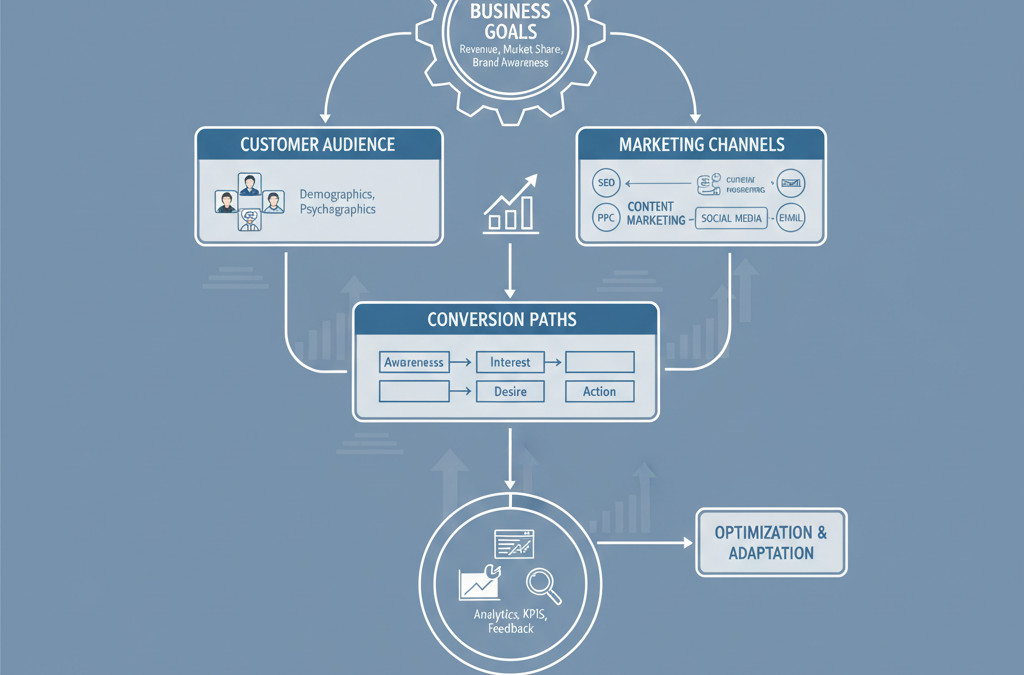
An HVAC marketing strategy is the plan that connects service goals, customer needs, seasonal demand, local search visibility, paid advertising, website conversion, budget, and tracking into one working system. Without a clear strategy, HVAC companies can spend money on ads, social posts, coupons, and website updates without knowing which activities are producing booked calls, estimate requests, maintenance agreements, or installation opportunities.
For HVAC owners, managers, and marketing coordinators, the value of strategy is clarity. A helpful breakdown of a marketing strategy that connects goals to growth explains the broader planning idea; for HVAC businesses, that same principle needs to be tied to local service areas, emergency demand, replacement cycles, technician capacity, and the quality of incoming leads.
HVAC marketing is different from general marketing because customer intent changes quickly. A homeowner with no heat in January may be ready to call immediately. A homeowner comparing heat pump options may need education, estimates, rebates information, and trust signals before booking. A commercial property manager may care about response time, maintenance programs, documentation, and long-term reliability. A strategy helps separate these audiences so each one receives the right message at the right time.
Start With the HVAC Business Goal, Not the Marketing Channel
A practical HVAC marketing strategy begins with a specific business target. “Get more traffic” or “rank higher on Google” is not specific enough. Traffic can increase while booked jobs remain flat, and rankings can improve for searches that do not bring the right customers.
Better HVAC goals are tied to service outcomes. Examples include more qualified AC repair calls, more furnace replacement estimates, more maintenance plan signups, more ductless mini-split inquiries, or fewer poor-fit calls outside the service area. The goal determines which channels, pages, ads, and tracking methods should receive attention first.
For example, an HVAC company that needs more emergency calls may focus on local SEO pages, Google Business Profile visibility, paid search campaigns, call extensions, and mobile-friendly landing pages. A company that wants more installation projects may need educational content, financing information, comparison pages, project galleries, estimate forms, and remarketing. A contractor focused on maintenance agreements may need email follow-up, seasonal reminders, service plan pages, and customer retention messaging.
For broader planning across search, paid media, content, web performance, and reporting, Zigma’s Digital Marketing Services page outlines service areas that can support a complete growth strategy.
How Strategy Turns HVAC Marketing Activity Into Better Decisions
A strategy is not just a list of marketing tasks. Posting on social media, running Google Ads, publishing blog articles, and redesigning service pages can all be useful, but only when each activity has a defined role.
In HVAC, strategy creates rules for making decisions. If homeowners are already searching “furnace repair near me,” search visibility and paid search may deserve priority. If visitors are reaching the site but not calling, landing page structure, trust signals, service area clarity, and calls to action may need work. If installation leads are low quality, messaging may need to better explain the service, expected process, financing options, or estimate requirements.
Key terms should stay simple. A customer segment is a group of customers with similar needs, such as emergency repair callers, replacement shoppers, maintenance plan customers, or commercial HVAC clients. A value proposition explains why someone should choose your HVAC company over another reasonable option. A conversion is a measurable action, such as a phone call, quote request, booking form, maintenance plan inquiry, or email signup.
Search visibility is often central for HVAC companies because many customers use search engines when they need help. If organic search is a priority, SEO Services can support technical improvements, local service pages, content planning, and performance measurement.
Core Parts of a Strong HVAC Marketing Strategy
A strong strategy connects the business model to the customer journey. For HVAC companies, the plan should account for service mix, seasonality, service areas, technician availability, local competition, and the difference between repair, replacement, and maintenance demand.
- Business goal: Define the outcome, such as more booked repair calls, replacement estimates, maintenance agreements, indoor air quality inquiries, or commercial service leads.
- Audience definition: Separate emergency homeowners, planned replacement shoppers, property managers, builders, landlords, and existing customers.
- Service positioning: Explain what makes the company a strong choice, such as service area coverage, experience, financing options, maintenance support, product knowledge, scheduling process, or customer service.
- Channel roles: Give SEO, PPC, email, social media, content, website design, and review management a clear job instead of treating every channel the same.
- Measurement plan: Track calls, forms, booked appointments, estimate requests, lead source, service type, and lead quality where possible.
The order matters. Choosing channels before defining the business target can create scattered activity. Starting with the target makes it easier to decide whether a campaign, service page, or offer supports the company’s actual growth needs.
Choosing HVAC Marketing Channels Without Guessing
HVAC companies usually need a mix of channels because customers do not all behave the same way. Emergency repair customers often search and call quickly. Replacement customers may compare options over time. Existing customers may respond to email reminders, maintenance plan offers, or seasonal tune-up messaging.
SEO, PPC, and content roles for HVAC companies
A) SEO: Search engine optimization helps an HVAC company appear for local searches related to services, systems, questions, and service areas.
- How it works: SEO improves technical access, service page relevance, internal linking, local content, and page experience so search engines can better understand and rank useful pages.
- Best fit: SEO fits HVAC companies that want long-term visibility for repair, installation, maintenance, and local service searches.
- Example: A contractor may build separate pages for furnace repair, AC installation, heat pumps, ductless systems, indoor air quality, and priority service areas.
B) PPC: Pay-per-click advertising can create faster visibility for high-intent searches, especially during busy heating and cooling seasons.
- How it works: PPC uses keyword targeting, ad copy, bidding, negative keywords, landing pages, call tracking, and conversion tracking to manage paid lead generation.
- Best fit: PPC fits HVAC companies that need near-term demand, want to test service offers, or need visibility while organic rankings develop.
- Example: A company can run search ads for “AC repair” or “furnace replacement” and compare lead quality by query, location, and landing page.
C) Content: Content supports trust, education, search coverage, and sales conversations when it answers real customer questions.
- How it works: Content explains problems, options, maintenance tips, system comparisons, repair versus replacement considerations, and what to expect during service.
- Best fit: Content fits HVAC companies with longer sales cycles, higher-ticket installations, recurring customer questions, or services that need explanation before booking.
- Example: A guide comparing heat pumps and traditional systems can help homeowners who are still researching their options.
Paid search and organic search often work together. PPC can reveal which search terms and messages produce calls or estimate requests, while SEO can turn those insights into stronger long-term pages. For businesses using paid search, Google Ads Management can help connect keywords, ads, landing pages, and tracking into one feedback loop.
What Separates an HVAC Marketing Plan From a Useful Strategy
A plan lists tasks. A useful strategy explains why those tasks matter, what they are expected to change, and how the HVAC company will judge whether the work should continue, pause, or improve.
This matters when trade-offs appear. Should the next budget go toward more Google Ads, new service pages, a faster website, review generation, local SEO, or email reminders? A task list may treat all of these as equal. A strategy ranks them by the current constraint.
If the website already gets qualified visitors but few people call, conversion improvements may matter more than more traffic. If calls are coming from outside the service area, location targeting and page messaging may need adjustment. If paid ads generate many inquiries but few booked jobs, keyword cleanup, negative keywords, landing page alignment, or lead qualification may be the next priority.
Useful comparison:
A task list says, “Publish four HVAC blog posts.”
A strategy says, “Create content around the questions homeowners ask before choosing repair, replacement, or maintenance.”
A measurement plan says, “Track calls, form submissions, engaged visits, and assisted conversions from those pages during a defined review period.”
The final version gives the team a way to improve instead of simply staying busy.
Analytics setup is not a minor detail. Call tracking, form tracking, GA4 setup, Google Tag Manager, and reporting dashboards help show whether marketing is producing attention, inquiries, booked appointments, or stronger sales opportunities.
Practical Steps to Build an HVAC Marketing Strategy
Step 1: Define the commercial target
Name the business result before choosing channels. The target may be more emergency repair calls, more replacement estimates, more maintenance plan signups, or better-fit commercial inquiries.
Key signal: The target should connect to booked work, estimate quality, revenue opportunity, or customer retention rather than visibility alone.
Common issue: HVAC teams often track clicks and impressions while dispatch, sales, and ownership care about booked jobs and lead quality.
Step 2: Map the HVAC customer journey
Separate emergency, research, comparison, and ready-to-book behavior. Each stage needs different messaging, pages, and calls to action.
Key signal: Search queries, call recordings, form details, sales questions, and landing page behavior can show where customers are in the journey.
Common issue: Sending a ready-to-call emergency visitor to a broad educational article can slow action, while pushing a research-stage replacement shopper too aggressively may reduce trust.
Step 3: Assign each channel a job
Every channel should have a clear role. SEO may capture recurring local intent, PPC may drive immediate service demand, email may support maintenance reminders, and social media may help with brand awareness and customer trust.
Key signal: Each channel should have a primary performance metric and a secondary diagnostic metric.
Common issue: Social media is sometimes judged by direct emergency calls, while paid search is judged by reach, even though the customer behavior behind each channel is different.
Step 4: Improve the conversion path
Traffic has limited value if the website makes action difficult. HVAC websites need clear service pages, phone numbers, booking forms, service area information, trust signals, mobile usability, and fast-loading pages.
Key signal: Watch call clicks, form completions, page engagement, mobile behavior, and conversion rate by service and traffic source.
Common issue: Companies increase ad spend before checking whether the landing page clearly answers customer objections and makes booking easy.
Step 5: Review, adjust, and document decisions
A strategy should include a review cycle. HVAC demand can change by season, weather, service capacity, and local competition, so decisions should be based on evidence rather than assumptions.
Key signal: Review lead source, booked appointment rate, service type, conversion rate, cost per qualified lead, and sales feedback together.
Common issue: Campaigns are often stopped too early or left running too long because no one defined what success should look like.
Common HVAC Marketing Mistakes That Weaken Growth
Most HVAC marketing problems do not come from lack of effort. They come from disconnected effort. A company can post regularly, spend on ads, update pages, and still struggle if the work is not connected to a clear business goal.
- Starting with channels instead of customers: Choosing SEO, PPC, or social media first can hide the real question: where does the ideal HVAC customer already show intent?
- Measuring activity instead of booked opportunities: Clicks and impressions are useful only when connected to calls, forms, estimates, service type, and lead quality.
- Ignoring the website experience: More traffic will not fix unclear service pages, slow mobile pages, hard-to-find phone numbers, or weak calls to action.
- Treating every service the same: Furnace repair, AC installation, ductless systems, maintenance plans, and commercial service may each need different messaging and conversion paths.
- Changing too much at once: If ads, keywords, landing pages, offers, and tracking all change together, it becomes harder to know what improved or weakened performance.
Good strategy creates focus. It does not make marketing rigid, but it gives the team enough structure to see whether the work is moving the HVAC business in the intended direction.
Where SEO, PPC, CRO, and Website Design Fit Together
SEO, PPC, conversion rate optimization, analytics, and web design should not operate as separate efforts. For HVAC companies, they work best as a connected system.
SEO can help build long-term visibility for services and local areas. PPC can create faster demand signals and support seasonal campaigns. CRO improves the path from visit to call, form, or booking. Analytics explains which signals are reliable enough to guide budget and content decisions.
The website is the foundation of the system. Page speed, mobile layout, service page structure, trust signals, tracking scripts, forms, and phone number visibility all affect performance. If the website makes it difficult for homeowners to understand services or request help, both paid and organic traffic can underperform. For site-related planning, Website Design & Development can support the technical foundation behind campaign performance.
How to Judge Whether Your HVAC Marketing Strategy Is Working
A strategy is working when the HVAC company can connect marketing activity to meaningful business movement. Not every channel will show results at the same speed, but reporting should make it easier to decide what to keep, repair, test, or pause.
Useful performance signals
- Lead quality: Are inquiries coming from the right service areas, service types, and customer profiles?
- Booked appointment rate: Are calls and forms turning into actual scheduled visits or estimates?
- Conversion rate: Are visitors taking action on service pages, landing pages, and contact pages?
- Cost per qualified lead: Are paid campaigns producing useful opportunities, not just raw form fills or calls?
- Organic visibility by service: Is SEO progress tied to important service categories and local intent?
- Retention and repeat business: Are maintenance reminders, service plan messages, and customer follow-ups supporting long-term value?
Context matters. A campaign that produces fewer but better-fit installation inquiries may be healthier than one that creates many low-intent calls. Volume without fit can waste office time, technician capacity, and sales effort.
FAQs About HVAC Marketing Strategy
It should be detailed enough to define the target customer, priority services, service areas, channel roles, tracking setup, budget direction, and review cycle. It does not need to predict every campaign detail, but it should give the team a clear basis for decisions.
The right starting point depends on timing, demand, and current visibility. Google Ads can help generate faster demand and test search intent, while SEO builds longer-term visibility through service pages, local optimization, technical improvements, and content. Many HVAC companies use both together.
Many HVAC conversions happen by phone. Call tracking helps show which channels, keywords, landing pages, and campaigns generate calls. When paired with lead quality review, it can help distinguish between general inquiries and valuable booked opportunities.
Monthly checks are useful for campaign performance, tracking issues, and budget control. Broader strategy reviews are often helpful quarterly or around major seasonal changes, especially before heating and cooling demand peaks.
A reset may be needed when marketing generates traffic but few booked jobs, when leads come from the wrong locations or services, when reporting cannot connect spend to outcomes, or when the team disagrees on what success means. Before changing everything, review tracking, audience fit, service positioning, and the website conversion path.
A Clearer Path From HVAC Marketing Effort to Evidence
A strong HVAC marketing strategy gives the business a practical way to choose, measure, and improve. The clearest plans define the commercial target, identify the customer segment, assign each channel a role, strengthen the conversion path, and review results with real service context.
For HVAC companies, that means connecting marketing to calls, booked appointments, estimate requests, service areas, technician capacity, and customer retention. When SEO, PPC, content, web design, CRO, and analytics work together, marketing becomes less about scattered activity and more about informed decisions that support sustainable growth.
If you want an outside review of your current digital marketing setup, you can request a strategy review.


