
For HVAC contractors, digital marketing is not just about getting more website visits. It is about turning local search demand, service-area pages, paid ads, phone calls, booking forms, reviews, and seasonal campaigns into measurable heating and cooling leads. Whether the goal is more furnace repair calls, air conditioner installation requests, maintenance plan enquiries, or commercial HVAC consultations, the marketing system should show what is working and what needs attention.
The same accountable growth principles that apply to any digital marketing business become especially important in HVAC because demand can shift by season, weather, urgency, equipment type, and service area. A campaign that looks strong on clicks may still fail if it brings low-quality enquiries, sends visitors to a weak landing page, or does not track phone calls properly.
For an HVAC business owner, the key question is not “Are we doing marketing?” The better question is “Can we connect marketing activity to booked jobs, qualified service calls, installation estimates, and repeat customer opportunities?” When the answer is yes, decisions about SEO, Google Ads, web design, content, and budget become much clearer.
Quick Facts for HVAC Marketing Planning
- Core purpose: HVAC digital marketing should turn local searches, paid clicks, website visits, and service-area visibility into qualified customer enquiries.
- Main channels: Local SEO, Google Ads, service pages, landing pages, reviews, content, email, social media, and analytics often work best together.
- Key metrics: Useful reporting focuses on booked calls, estimate requests, form submissions, phone calls, cost per lead, conversion rate, and lead quality.
- Common risk: Campaigns can generate traffic without producing profitable jobs if tracking, targeting, or landing pages are weak.
- Practical sequence: Fix tracking first, improve HVAC landing pages next, then scale the channels that generate qualified demand.
Why HVAC Marketing Needs Clear Measurement
HVAC marketing is often urgent and local. A homeowner with no heat in winter or no cooling during a hot week may search, compare, call, and book quickly. A commercial property manager, on the other hand, may take more time to compare maintenance contracts, repair response, certifications, and service coverage. Because these journeys are different, HVAC marketing needs tracking that separates traffic activity from real business outcomes.
A meaningful conversion for an HVAC company may include:
- A phone call from a homeowner requesting emergency repair
- A form submission for a furnace, heat pump, or air conditioner installation quote
- A booked maintenance appointment
- A request for commercial HVAC service
- A financing or rebate-related enquiry
- A repeat customer joining a maintenance plan
Once these actions are defined, the business can ask better questions. Which search terms produced qualified calls? Which service pages led to estimate requests? Which ads attracted people outside the service area? Which landing pages helped visitors book instead of leaving the site?
How a Digital Marketing System Supports HVAC Growth
A strong HVAC marketing system connects audience research, service-area strategy, campaign execution, conversion tracking, and reporting. Each part affects the next. If keyword targeting is too broad, the campaign may attract people searching for DIY troubleshooting instead of customers ready to book service. If the website does not explain the company’s service areas, visitors may leave before calling. If phone calls are not tracked, paid campaigns may look less valuable than they actually are.
Accountable marketing starts by defining the business goal. For an HVAC contractor, that goal may be more repair calls, more installation estimates, better maintenance plan enrolment, or stronger visibility in specific neighbourhoods. The campaign should then be built around that goal instead of chasing impressions, clicks, or general website traffic alone.
For companies reviewing their broader online strategy, Digital Marketing Services can provide a useful overview of how SEO, PPC, web design, content, and analytics fit together as a connected system.
The Core Digital Channels for HVAC Companies
HVAC companies usually need a channel mix that supports both urgent demand and long-term visibility. Some customers need immediate repair. Others are researching system replacement, indoor air quality, heat pumps, ductwork, or maintenance plans. The best marketing approach accounts for both timelines.
Local SEO Builds Long-Term Search Visibility
Search engine optimization helps HVAC companies appear when people search for services such as air conditioner repair, furnace installation, heat pump service, boiler repair, ductless mini-split installation, or commercial HVAC maintenance. SEO also supports service-area visibility, technical site health, internal linking, content quality, and page structure.
For HVAC companies, SEO should not be limited to a homepage. Service pages, city or neighbourhood pages, FAQ content, maintenance articles, and equipment-related guides can help search engines and customers understand what the company offers. If organic search is a priority, SEO Services can help clarify how technical audits, content planning, and on-page improvements work together.
Google Ads Can Capture Urgent HVAC Demand
Pay-per-click advertising can help an HVAC company appear in front of people who are actively searching for service. This is especially useful for emergency repairs, seasonal promotions, new service-area campaigns, and competitive installation categories. The risk is that budget can be wasted quickly if ads show for the wrong searches, outside the service area, or to people looking for jobs, parts, or DIY instructions.
Strong HVAC PPC management usually includes keyword control, negative keywords, location settings, ad testing, call tracking, landing page alignment, and regular reporting. For search campaigns, Google Ads Management can provide structure for campaign setup, bidding, testing, and performance review.
Website Design Affects Every HVAC Lead Source
An HVAC website is where trust is either confirmed or lost. A visitor may arrive from Google, a paid ad, a review platform, social media, or a referral. Once they land on the site, they need to quickly understand what services are offered, where the company works, how to request help, and why the business is credible.
Important HVAC website elements include mobile usability, fast loading, clear calls to action, visible phone numbers, simple forms, service-area clarity, financing or maintenance plan information where relevant, and pages that answer common buyer questions. A redesign should not be treated as a visual project only. It should protect SEO value, improve conversion paths, and make tracking easier. Website Design & Development is most effective when technical planning and conversion planning are included early.
Content Helps Customers Choose With Confidence
HVAC content can support both search visibility and customer trust. Articles about when to repair versus replace a system, how maintenance works, what affects comfort, what to expect during installation, or how different heating and cooling systems compare can help prospects make informed decisions. The goal is not to publish content for its own sake. The goal is to answer real customer questions and support the next step in the buying process.
Social Media Supports Awareness and Familiarity
Social media can help HVAC companies stay visible in their local market, share seasonal reminders, highlight team updates, promote maintenance messaging, and support reputation. However, social activity should be evaluated by its role in the customer journey rather than by engagement alone. A post may not create an immediate booking, but it can support familiarity before a customer searches or calls later.
Why Tracking Should Come Before Scaling Spend
Many HVAC businesses increase ad budgets during peak seasons without first confirming whether tracking is reliable. That can create expensive confusion. If phone calls are not attributed correctly, if forms are not tracked, or if campaigns are measured only by clicks, the business may not know which channels are producing useful enquiries.
Useful HVAC marketing tracking may include:
- Form tracking: To measure quote requests, service enquiries, and maintenance plan interest.
- Phone call tracking: To identify which channels and campaigns generate calls.
- Event tracking: To measure clicks on phone numbers, booking buttons, financing links, or service-area pages.
- Campaign naming discipline: To keep reports clean and understandable.
- Lead quality review: To separate real service opportunities from low-fit enquiries.
Good reporting should answer practical questions: Which services are generating demand? Which areas are producing leads? Which ads are wasting spend? Which landing pages need improvement? Which campaign changes should happen next?
SEO and PPC Work Better When HVAC Teams Share Data
SEO and PPC are often managed separately, but HVAC companies can benefit when the data is shared. Paid search can reveal which service keywords, locations, and messages produce enquiries quickly. SEO can use that insight to improve service pages and build long-term organic visibility.
For example, if a paid campaign shows that a specific installation service attracts qualified estimate requests, that insight may support a dedicated SEO page, stronger internal linking, and related educational content. If an SEO page brings traffic but few calls, paid landing page testing may reveal clearer headlines, calls to action, or service explanations.
SEO versus PPC for HVAC marketing
SEO for durable visibility: SEO is useful when an HVAC company wants to build long-term visibility for recurring service demand, service areas, and informational searches.
- How it works: SEO improves page relevance, technical health, content quality, internal linking, and search engine understanding.
- Best fit: HVAC companies with stable services, defined locations, and a commitment to ongoing website improvement.
- Example: Building strong pages for furnace repair, AC installation, heat pump service, and maintenance plans.
PPC for faster testing: PPC can generate quicker feedback on search terms, ad messages, locations, and landing pages.
- How it works: Paid campaigns target specific searches or audiences, then use conversion data to refine bids, ads, exclusions, and pages.
- Best fit: Seasonal campaigns, emergency services, new market pushes, and competitive installation categories.
- Example: Testing which repair or replacement message creates more qualified enquiries before updating SEO pages.
Combined SEO and PPC for shared learning: A blended approach uses PPC for quicker insight and SEO for longer-term search coverage.
- How it works: Paid search data informs content priorities, while organic performance can reduce dependence on paid clicks for recurring demand.
- Best fit: HVAC companies that need current lead flow while building stronger local search visibility over time.
- Example: A high-converting paid keyword becomes the basis for a dedicated landing page and supporting educational content.
What Makes an HVAC Landing Page Convert Better
A landing page is not just a place to send traffic. For HVAC campaigns, it should help a visitor decide whether to call, book, or request an estimate. The page should match the visitor’s intent. Someone searching for emergency repair needs different information than someone comparing replacement options.
Strong HVAC landing pages usually include:
- A clear service headline: The visitor should immediately know the page matches their need.
- Service-area clarity: The page should explain where the company works.
- Simple contact options: Phone numbers, forms, and booking buttons should be easy to find.
- Trust signals: Licensing, insurance, reviews, warranties, financing, brands, or guarantees may be relevant if accurate and current.
- Process clarity: Visitors should know what happens after they call or submit a form.
- Mobile usability: Many HVAC searches happen from mobile devices, especially urgent repair searches.
The best landing page improvements are based on behaviour and lead quality, not personal preference alone. If visitors click but do not call, the problem may be message clarity, layout, trust, form friction, or a mismatch between the ad and the page.
How Smaller HVAC Companies Can Compete Online
Smaller HVAC companies do not need to copy large competitors in every channel. They can compete by being more focused. Clear service pages, accurate local targeting, strong reviews, fast follow-up, and consistent tracking can make a smaller budget work harder.
A practical plan might start with a technical website review, then prioritize the most valuable service pages. Paid search can test which messages and locations produce qualified enquiries. SEO content can answer questions customers ask before booking. Conversion improvements can then make forms, phone numbers, calls to action, and trust signals easier to use.
Signs an HVAC Company Is Ready to Scale Marketing
- Clear service priorities: The company knows which services create worthwhile jobs and which ones are less profitable or less strategic.
- Reliable website foundation: The site loads properly, works on mobile, explains services clearly, and makes it easy to call or enquire.
- Lead quality feedback: Office staff, technicians, and sales teams can identify which leads are qualified.
- Consistent reporting: Marketing performance is reviewed regularly using the same source of truth.
- Operational follow-up: Calls and forms are handled quickly and consistently enough to support campaign growth.
A Practical Checklist Before Increasing HVAC Marketing Spend
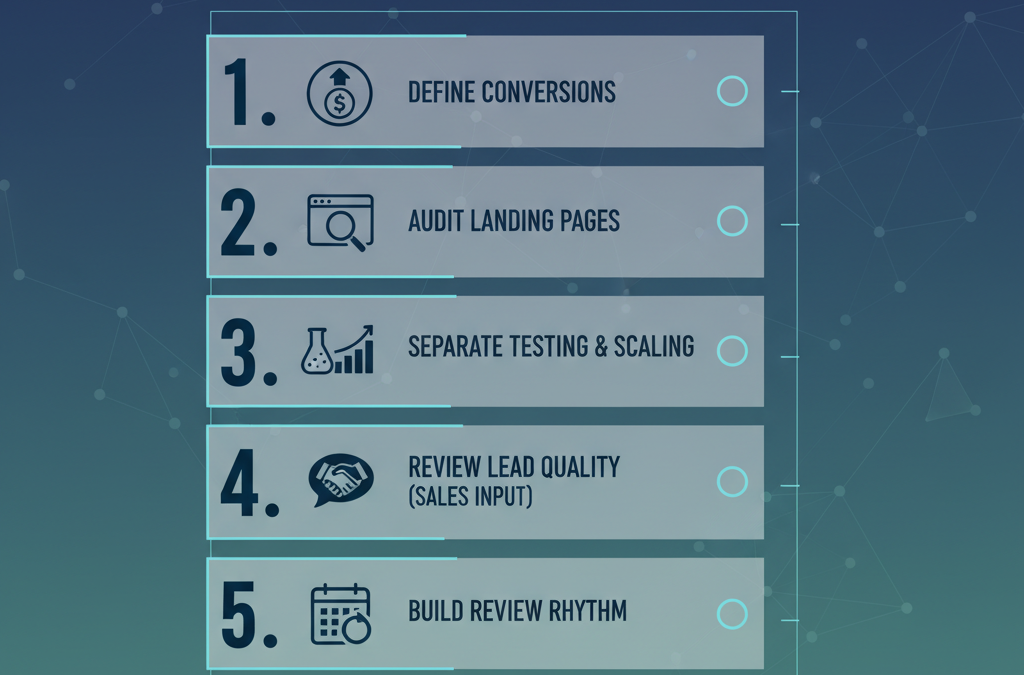
Before raising ad budgets or producing more content, HVAC companies should check the foundation. More traffic can amplify problems if the website is confusing, forms are not working, call tracking is missing, or campaigns are attracting the wrong audience.
Step 1: Define the Conversion
Decide which actions count as meaningful outcomes. A phone call for emergency repair, a booked maintenance visit, and an installation quote request may all be valuable, but they should not be measured the same way if they represent different business goals.
Watch for: Reports that celebrate clicks without showing call quality, booking value, or service fit.
Step 2: Check Tracking Accuracy
Confirm that forms, calls, booking buttons, and key website actions are tracked correctly. Without this, it is difficult to know which campaigns deserve more budget.
Watch for: Missing phone call data, duplicate conversions, broken forms, or inconsistent campaign naming.
Step 3: Audit the Website and Landing Pages
Review the pages that receive traffic. HVAC visitors need fast answers about service, location, availability, credibility, and next steps.
Watch for: Vague headlines, hidden phone numbers, unclear service areas, weak mobile layouts, or slow pages.
Step 4: Separate Testing From Scaling
Test messages, ads, keywords, and landing pages in a controlled way before expanding budget. Changing too many things at once makes it harder to understand what caused performance to improve or decline.
Watch for: Simultaneous changes to ads, budgets, pages, locations, and keywords without a clear testing plan.
Step 5: Review Lead Quality With the Team
Marketing data should be checked against real customer interactions. Dispatch, office staff, technicians, and sales teams can often identify patterns that dashboards miss.
Watch for: High lead volume with poor fit, wrong locations, repeated non-service enquiries, or customers asking for services the company does not offer.
Step 6: Build a Review Rhythm
Set a regular schedule to review campaigns, landing pages, technical issues, content needs, and conversion data. HVAC marketing works best as continuous improvement, not as a one-time launch.
Watch for: Reports that show numbers but do not identify the next decision.
Warning Signs Your HVAC Marketing Needs a Reset
A marketing reset is not a failure. It often means the business has changed, the market has shifted, or the old tracking setup no longer supports good decisions. HVAC companies should consider a reset when reporting becomes confusing or when more spend does not produce better opportunities.
Common warning signs include:
- Rising ad spend without better lead quality
- More website traffic but no increase in qualified calls or estimate requests
- Service pages that no longer match current offerings
- Campaigns attracting customers outside the service area
- Reports that conflict between platforms
- Phone calls that are not tracked back to source
- Landing pages that do not explain the service clearly
Short-term fixes versus system fixes
A short-term fix may pause a weak keyword or rewrite an ad.
A system fix may rebuild tracking, revise landing pages, improve service pages, and connect lead quality back to source data.
Short-term fixes can help, but system fixes usually explain why performance changed.
The stronger path is usually to simplify first. Confirm tracking, define qualified outcomes, repair the highest-impact website issues, and then decide which channels deserve more investment.
How to Choose a Marketing Partner for an HVAC Business
Choosing a marketing partner is easier when the evaluation focuses on process rather than promises. A strong partner should understand how local intent, service urgency, seasonality, call tracking, landing pages, and website structure affect HVAC results.
Useful questions include:
- How will HVAC conversions be defined? The agency should clarify which calls, forms, bookings, and estimate requests count as qualified outcomes.
- How will phone calls be tracked? HVAC companies often receive valuable leads by phone, so call attribution matters.
- How will service areas be handled? Campaigns should avoid wasting spend outside the company’s actual coverage area.
- How will SEO and paid search share data? Keyword and conversion insights should improve both channels.
- How will landing pages be improved? The agency should look beyond traffic and focus on conversion paths.
- How will reports connect to business outcomes? Reporting should explain what changed, why it matters, and what decision comes next.
For businesses that want a structured review of tracking, channel mix, and growth priorities, Book a Free Strategy Call can be a practical next step.
FAQs About Digital Marketing for HVAC Companies
What is the most important digital marketing metric for an HVAC company?
The most useful metrics are tied to qualified business outcomes, such as booked service calls, installation estimate requests, maintenance plan enquiries, and phone calls from the right service area. Clicks and impressions can be helpful diagnostic signals, but they should not be treated as success by themselves.
Should an HVAC company start with SEO or Google Ads?
It depends on the business goal. Google Ads can provide faster feedback for urgent service demand, seasonal campaigns, or new service areas. SEO is better for building long-term visibility across services, locations, and customer questions. Many HVAC companies benefit from using both together.
Why is call tracking important for HVAC marketing?
Many HVAC leads happen by phone, especially for urgent repair needs. Call tracking helps connect phone enquiries back to the channel, campaign, keyword, or landing page that produced them. Without it, reports may undervalue campaigns that generate calls instead of forms.
How can an HVAC website improve lead generation?
An HVAC website can improve lead generation by loading quickly, working well on mobile, showing clear service areas, making phone numbers easy to tap, explaining services clearly, and giving visitors simple ways to request help or estimates.
What should HVAC companies review before increasing ad spend?
Before increasing spend, HVAC companies should confirm that conversion tracking works, landing pages are clear, service-area targeting is accurate, campaigns are attracting qualified searches, and staff can follow up consistently on new enquiries.


