
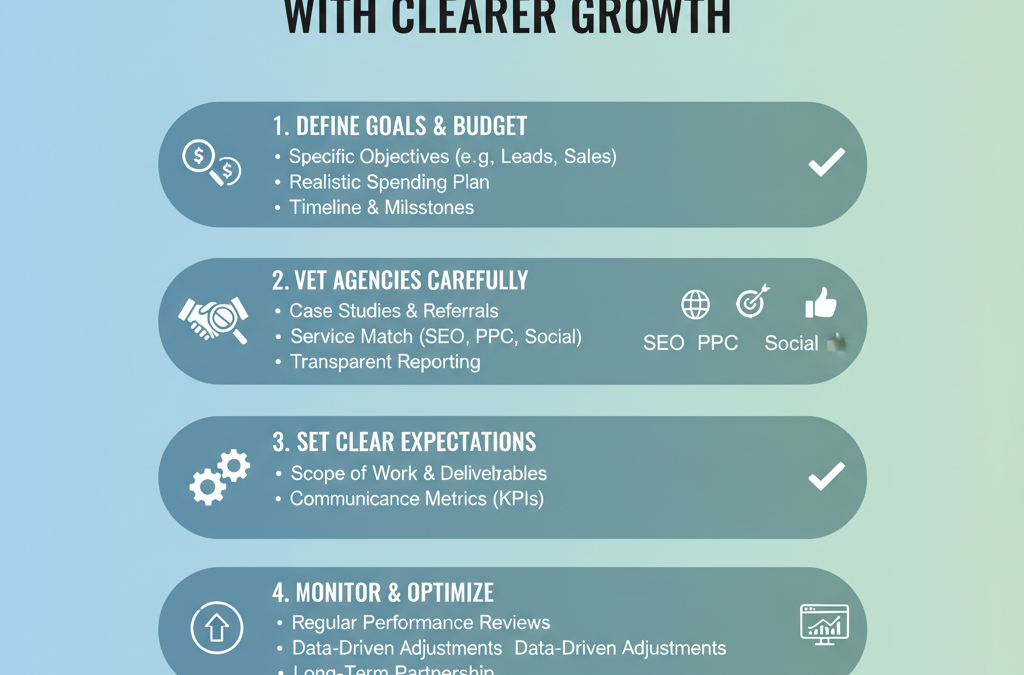
For HVAC companies, a marketing agency for small business is most useful when it helps turn search visibility, paid ads, website pages, reviews, and tracking into a steady system for service calls, installation inquiries, and maintenance leads. Heating and cooling businesses rarely need “more marketing activity” for its own sake. They need a practical way to reach homeowners and property managers when furnaces fail, air conditioners need replacement, indoor air quality questions come up, or seasonal tune-ups are being planned.
Many HVAC owners already understand referrals, repeat customers, and local reputation. The challenge is making digital marketing support those strengths instead of scattering time across random posts, boosted ads, and website edits. For a broader business-focused breakdown, this guide to a marketing agency for small business explains the same core idea: small companies need structure, measurement, and clear priorities more than disconnected activity.
In the HVAC industry, that structure usually means choosing the right mix of local SEO, paid search, service-area pages, landing pages, review signals, and conversion tracking. If your company is getting website visits but not enough booked calls, or if ad spend rises without clear lead quality, the issue may not be demand. It may be that the marketing system is not aligned with how customers search for urgent repairs, planned replacements, and trusted local contractors.
What a Marketing Agency Does for an HVAC Small Business
A strong marketing agency does more than run ads or publish blog posts. For an HVAC company, it connects customer intent, local search visibility, service-page content, calls to action, landing pages, and reporting into one coordinated plan. That might include improving pages for furnace repair, AC installation, heat pump services, ductless systems, emergency HVAC support, or seasonal maintenance, depending on the services your company actually wants to grow.
The day-to-day work often includes reviewing search terms, improving website pages, managing paid campaigns, checking local visibility, updating conversion tracking, and identifying where leads are coming from. If your HVAC company is considering outside help, general Digital Marketing Services may be useful when they are applied to real business outcomes such as booked service calls, quote requests, maintenance plan inquiries, or installation consultations.
The biggest value is coordination. An HVAC contractor might hire one person to build a website, another to run ads, and someone else to post on social media. But if the website does not clearly explain services, the ads send people to weak pages, and phone calls are not tracked, the business still lacks a reliable growth system. That is why many small service companies look for SEO Services, PPC management, analytics, and landing-page support that work together instead of separately.
Why HVAC Marketing Is Different from Generic Small Business Marketing
HVAC demand is often local, seasonal, and service-specific. A homeowner searching for “furnace repair near me” usually has a different level of urgency than someone researching “best heat pump options.” A business comparing rooftop unit service providers may need different proof than a homeowner looking for an AC tune-up. A marketing agency that supports HVAC companies has to understand those differences and organize campaigns around intent.
Seasonality also matters. Heating calls may rise during colder months, cooling searches may increase before or during hot weather, and maintenance campaigns may need to start before peak demand. A practical plan should help the company prepare service pages, ads, budgets, and local visibility before the busy period is already underway.
HVAC businesses also depend heavily on trust. Customers want to know whether the company services their area, handles their equipment type, offers the service they need, and can be contacted easily. That means your website is not just an online brochure. It is part of your sales process, customer support process, and lead-generation system.
How to Choose the Right Marketing Agency for an HVAC Company
Choosing an agency is easier when you look for practical thinking instead of polished promises. A good agency should be able to explain which services should be promoted first, how campaigns will be tracked, what pages need improvement, and how success will be measured. For an HVAC business, vague reports about impressions and clicks are not enough. The real question is whether marketing is helping produce qualified calls and inquiries.
There is also a difference between traffic and lead quality. A page might rank for broad HVAC topics but attract visitors who are not ready to book. A paid campaign might generate clicks from people outside your service area. A social post might get engagement without producing real inquiries. A strong agency should be able to explain how SEO, PPC, local search, website improvements, and reporting influence one another.
Questions HVAC Owners Should Ask Before Hiring an Agency
- Service focus: Which HVAC services will be prioritized first, and why?
- Local targeting: How will the agency handle service areas, neighbourhoods, and local search intent?
- Tracking setup: Will calls, forms, quote requests, and booked appointments be visible in reporting?
- Landing pages: Who will improve service pages and campaign landing pages after traffic starts arriving?
- Paid search control: How often will search terms, negative keywords, location settings, and lead quality be reviewed?
- Reporting clarity: Will reports connect marketing activity to actual inquiries, not only traffic and clicks?
Local SEO for HVAC Contractors
For many HVAC small businesses, local SEO is one of the most important digital marketing foundations. Customers usually search by service and location, such as furnace repair, AC replacement, boiler service, heat pump installation, or HVAC maintenance in a specific city or area. If your company does not appear clearly for those searches, competitors may get the call even when your team is a good fit.
Local SEO for HVAC usually involves accurate service pages, clear location signals, a well-maintained Google Business Profile, consistent contact information, relevant reviews, and useful content that matches real customer questions. It is not only about ranking for a single broad term. It is about being visible when people search for specific problems your technicians can solve.
Service-area pages can also help when they are useful and specific. A page should not simply swap in a city name. It should explain what services are available, how customers can contact the company, and why the business is relevant to that area. Thin, generic pages are less helpful for both users and search engines.
PPC and Google Ads for HVAC Lead Generation
Paid search can be especially useful for HVAC companies because many searches show strong intent. Someone searching for emergency furnace repair, AC not working, or HVAC installation estimates may be close to contacting a provider. However, paid ads can also waste budget quickly if campaigns are too broad, locations are loose, or landing pages do not match the search.
Good Google Ads Management for HVAC should include careful keyword selection, location targeting, negative keyword review, ad copy that matches the service, and landing pages built around the customer’s immediate need. A furnace repair ad should not send visitors to a generic homepage if a focused repair page would answer their questions more clearly.
PPC also provides useful data. It can show which services attract demand, which messages lead to calls, and which locations produce better inquiries. That information can support SEO, website improvements, and seasonal planning. The goal is not simply to buy clicks. The goal is to learn which searches turn into valuable HVAC leads.
SEO vs PPC for HVAC Companies
Search engine optimization and pay-per-click advertising solve different problems for HVAC businesses. SEO is usually better for building long-term visibility across repair, installation, maintenance, and local service searches. PPC is useful when the company needs faster visibility, wants to promote a seasonal service, or needs data before organic rankings have time to develop.
For example, an HVAC contractor may use PPC to promote AC repair during a hot period while also building SEO pages for air conditioning services, furnace maintenance, heat pump installation, and indoor air quality. Over time, organic visibility can reduce dependence on paid clicks for some searches, while paid campaigns can remain useful for competitive or urgent services.
A Simple HVAC Marketing Comparison
- SEO fits best when your HVAC company wants durable local visibility and stronger service-area coverage.
- PPC fits best when you need faster search presence, seasonal promotion, or controlled testing.
- A combined strategy fits best when you want both immediate lead opportunities and long-term search growth.
Website and Landing Page Improvements for HVAC Leads
An HVAC website should make it easy for customers to understand what you do, where you work, and how to contact you. If visitors have to search for service areas, phone numbers, emergency support details, or installation options, some will leave before contacting your business. Marketing performance often stalls because campaigns improve while the website experience stays unclear.
Useful HVAC service pages usually answer basic questions quickly. They identify the service, explain common situations, show the company’s service area, include clear calls to action, and make phone or form contact simple. For installation services, pages may need to support a longer decision process. For repair services, they may need to emphasize speed, clarity, and direct contact.
Conversion improvements do not always require a full redesign. Sometimes better headings, clearer buttons, stronger service explanations, faster pages, improved mobile layout, or dedicated landing pages can make campaigns easier to evaluate. The important point is that the website should be treated as part of marketing, not as a separate project that never changes.
Tracking and Reporting for HVAC Marketing
Without proper tracking, HVAC companies can make budget decisions based on partial information. A campaign may look weak if phone calls are not counted. A page may seem successful because it gets traffic, even though it produces few qualified inquiries. A lead source may look strong until the team realizes many contacts are outside the service area or asking for services the company does not provide.
Useful reporting should show the actions closest to revenue. That may include phone calls, contact forms, quote requests, booked appointments, and lead source details. Rankings, clicks, and impressions can be helpful, but they should support decision-making rather than replace business outcomes.
HVAC Metrics Worth Reviewing
- Qualified calls: Calls from people in your service area asking about services you provide.
- Form inquiries: Requests for repair, maintenance, replacement, or estimates.
- Service-page performance: Which pages attract visits and which ones produce leads.
- Paid search terms: The actual searches that trigger your ads.
- Location performance: Which areas generate useful inquiries.
- Conversion paths: How users move from search or ads to contact.
Five Signs Your HVAC Business Is Ready for Agency Support
1. Lead Flow Is Too Inconsistent
If calls rise and fall without a clear reason, your marketing may lack reliable tracking or channel coordination. HVAC demand can be seasonal, but your business should still understand which services, pages, ads, and locations are producing inquiries.
2. Your Website Gets Traffic but Few Calls
Traffic alone does not mean the website is working. If visitors are not contacting you, the issue may be weak service pages, unclear calls to action, slow mobile performance, or mismatched search intent.
3. Paid Ads Are Running Without Close Review
HVAC paid search campaigns need regular attention. Search terms, negative keywords, locations, budgets, and landing pages should be reviewed so spend is focused on relevant service inquiries.
4. Local Competitors Are More Visible Online
If competitors appear more often in local search, map results, or service-specific searches, your company may need stronger local SEO, better service pages, and improved Google Business Profile signals.
5. Marketing Tasks Keep Getting Delayed
HVAC owners and managers are often focused on dispatch, technicians, customers, inventory, and operations. If website updates, campaign reviews, content, and reporting keep getting pushed aside, an agency can help create consistency.
What HVAC Companies Should Understand Before Hiring an Agency
- More channels do not automatically mean more leads. A focused local SEO and paid search plan may outperform scattered activity across every platform.
- Lead quality matters more than raw traffic. The goal is not just more visitors. It is more relevant inquiries from people who need your HVAC services.
- Your website affects every campaign. Ads, SEO, and local listings all perform better when service pages are clear and easy to use.
- Tracking changes decisions. When you can see where calls and forms come from, it becomes easier to invest in what is actually working.
- Seasonal planning should happen early. HVAC marketing is easier to manage when campaigns and pages are prepared before peak demand arrives.
A Practical Next Step for HVAC Business Owners
If you are comparing agencies, start by asking for a clear explanation of priorities. Which HVAC services should be promoted first? Which pages need work? How will calls and forms be tracked? How will SEO and PPC support each other? A useful agency should be able to answer those questions in plain business terms.
For HVAC companies, the right marketing support should connect visibility with real customer actions. That means improving local search presence, building stronger service pages, managing paid campaigns carefully, and using reporting to guide decisions. If you need tailored guidance, you can 📩 Ask an SEO/PPC question and discuss which digital marketing priorities make sense for your service area and growth goals.
FAQs About Marketing Agencies for HVAC Small Businesses
Does an HVAC company need a marketing agency?
An agency can be useful when leads are inconsistent, campaigns are not being reviewed, local competitors are more visible, or the company does not have time to manage SEO, PPC, website updates, and tracking internally.
Should HVAC contractors start with SEO or PPC?
It depends on timing and goals. SEO is usually better for long-term local visibility, while PPC can provide faster search presence and useful campaign data. Many HVAC companies benefit from using both in a coordinated plan.
What should HVAC marketing reports include?
Reports should include qualified calls, forms, service-page performance, paid search terms, location performance, and conversion data. Clicks and traffic are useful, but they should be connected to real inquiries.
Why is local SEO important for HVAC companies?
Most HVAC customers search locally when they need repair, installation, or maintenance. Strong local SEO helps your business appear for service-specific searches in the areas you serve.
Can paid ads work for emergency HVAC services?
Paid ads can be useful for urgent HVAC searches when campaigns are targeted carefully and landing pages match the service. They should be monitored closely to avoid irrelevant clicks and wasted spend.
Related Topics:
- HVAC local SEO
- Google Ads for HVAC contractors
- HVAC lead generation
- Service-area landing pages
- Conversion tracking for home service businesses


