
Why HVAC Marketing Needs More Than Website Traffic
For HVAC companies, SEO digital marketing is not just about getting more visitors to a website. It is about attracting homeowners, property managers, and businesses who are actively looking for heating, cooling, ventilation, repair, replacement, maintenance, or emergency service help. A furnace repair page that ranks well but does not generate calls is not doing enough. A Google Ads campaign that brings clicks but no booked appointments is also incomplete.
The broader idea behind SEO digital marketing that turns traffic into leads is especially relevant for HVAC contractors because search visibility, paid ads, landing pages, reviews, tracking, and follow-up all need to work together. When these parts are treated separately, HVAC businesses can end up paying for traffic without knowing which campaigns actually produce phone calls, quote requests, or service bookings.
A stronger approach starts with one practical question: where is the lead flow breaking down? Some HVAC companies need better local visibility. Others have traffic but weak conversion paths. Some rely too heavily on seasonal paid ads without building long-term organic rankings. For a broader look at coordinated online growth, review Digital Marketing Services.
What SEO Digital Marketing Looks Like for HVAC Companies
HVAC SEO digital marketing combines organic search, local SEO, paid search, website improvements, analytics, and conversion optimization into one connected lead generation system. For an HVAC contractor, this may include service pages for furnace repair, air conditioner installation, heat pump service, duct cleaning, indoor air quality, boiler repair, maintenance plans, and emergency HVAC support.
Search engine optimization alone can improve rankings, but rankings are only useful if the page matches the customer’s intent. Someone searching for “emergency furnace repair near me” needs fast reassurance, clear service area information, and an obvious call button. Someone searching for “new AC installation cost” may need educational content, financing details, equipment options, and a quote request form. HVAC marketing works better when each page is built around the reason the customer is searching.
Important parts of a modern HVAC digital marketing strategy often include:
- HVAC SEO: Improving organic rankings for high-intent heating, cooling, installation, repair, and maintenance searches.
- Local SEO: Strengthening Google Business Profile visibility, service area signals, reviews, location pages, and map results.
- Google Ads and PPC: Capturing urgent demand for services such as no-heat calls, AC repair, or HVAC replacement quotes.
- Landing page optimization: Creating focused pages that make it easy for visitors to call, request service, or book an estimate.
- Conversion tracking: Measuring phone calls, form fills, quote requests, booking clicks, and campaign sources through tools such as GA4 and Google Tag Manager.
- Content strategy: Answering homeowner questions about system problems, maintenance, efficiency, replacement timing, and indoor comfort.
Businesses that want deeper organic visibility often work with SEO Services that address technical SEO, local search, content structure, and conversion intent together.
Why HVAC Lead Generation Is Different from General Website Marketing
HVAC customers often search with urgency. A homeowner with no heat in winter or no cooling during a hot week is not browsing casually. They want a provider who appears reliable, local, available, and easy to contact. That means HVAC marketing must reduce friction quickly.
At the same time, not every HVAC search is urgent. Some visitors are researching replacement systems, comparing maintenance plans, looking into heat pumps, or trying to understand whether a repair is worth it. A strong SEO digital marketing strategy separates these search intents instead of sending everyone to the same generic homepage.
Emergency Service Searches
Emergency HVAC searches usually require clear service-area language, phone-first design, trust signals, and fast access to help. These pages should avoid unnecessary clutter and focus on the next action.
Replacement and Installation Searches
Customers considering a new furnace, air conditioner, heat pump, or rooftop unit often need more information before contacting a contractor. Content should explain options, process, service coverage, and how to request an estimate without overpromising results or inventing pricing claims.
Maintenance and Recurring Service Searches
Maintenance plan marketing often works best when it explains convenience, seasonal readiness, and what is included. These pages can support both homeowners and commercial clients, depending on the HVAC company’s services.
How Local SEO Helps HVAC Contractors Compete
Local visibility is critical for HVAC companies because most customers prefer a nearby provider. In competitive markets such as Toronto, the GTA, and surrounding service areas, search results can include paid ads, map listings, directory results, review platforms, and organic service pages. An HVAC company needs a strategy for more than one part of the results page.
Local SEO for HVAC usually includes Google Business Profile optimization, consistent business information, review management, local landing pages, service-area clarity, and helpful on-site content. The goal is to help search engines and customers understand where the company works and which services it provides.
Local HVAC SEO priorities often include:
- Clear pages for core services such as furnace repair, AC installation, heat pump service, and HVAC maintenance.
- Useful location or service-area pages that are written for real customers, not duplicated for search engines.
- Consistent name, address, phone number, and service-area details across important online profiles.
- Strong mobile usability, especially for customers searching during an HVAC problem.
- Prominent call buttons, booking forms, and quote request options.
SEO vs PPC for HVAC Companies
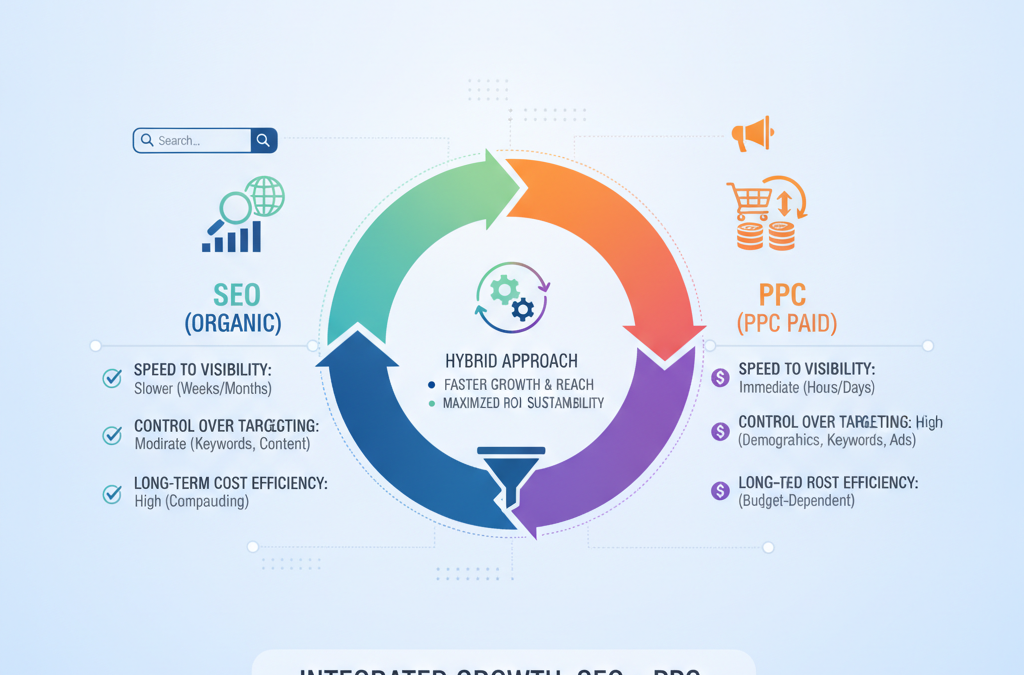
SEO and PPC both matter in HVAC marketing, but they serve different roles. SEO helps build long-term visibility for service, location, and informational searches. PPC can place ads in front of customers quickly, especially during seasonal demand or emergency service periods. The best choice depends on budget, competition, service mix, and how ready the website is to convert traffic.
When SEO Makes Sense
SEO is useful for HVAC companies that want sustainable visibility over time. Strong service pages, technical site health, internal linking, local content, and helpful homeowner resources can support organic rankings for a wide range of searches. SEO is not instant, but it can reduce dependence on paid clicks as visibility improves.
When PPC Makes Sense
PPC can be valuable when an HVAC company needs faster lead flow, wants to promote a specific service, or needs to respond to seasonal demand. Paid search can also help test which keywords, offers, and landing pages produce better enquiries before investing in long-term SEO content.
Why a Hybrid Strategy Often Works
Many HVAC businesses benefit from using PPC and SEO together. Paid campaigns can capture immediate demand while SEO builds long-term authority. Search term data from ads can also reveal which services or customer concerns deserve dedicated organic pages.
Turning HVAC Website Visitors into Calls and Form Leads
Traffic does not automatically become revenue. HVAC websites need clear conversion paths because visitors may be stressed, comparing providers, or searching from a mobile phone. If the next step is unclear, they may leave and contact another contractor.
High-performing HVAC pages usually make the following details easy to find:
- What service is offered.
- Which areas are served.
- How to request help.
- Whether emergency or same-day service information is available, if applicable.
- What type of customers the company serves, such as residential, commercial, or both.
- Trust signals such as reviews, credentials, warranties, process details, or service guarantees where accurate and appropriate.
Conversion rate optimization for HVAC does not always require a full redesign. Sometimes the most useful improvements are simple: stronger headings, clearer calls to action, faster page speed, shorter forms, better mobile buttons, or service-specific landing pages.
What HVAC Companies Should Track
Without proper tracking, an HVAC company may not know which campaigns are producing qualified leads. Website sessions and impressions are useful, but they do not tell the whole story. A campaign with fewer leads may still be stronger if those leads are better matched to profitable services.
Useful HVAC marketing metrics include:
- Phone calls: Calls from organic search, paid search, Google Business Profile, and landing pages.
- Form submissions: Quote requests, service requests, maintenance plan enquiries, and contact forms.
- Lead quality: Whether enquiries match the company’s service area, availability, and preferred job types.
- Keyword intent: Which search terms produce real customers rather than low-value traffic.
- Landing page performance: Which pages generate calls, forms, or booking actions.
- Cost efficiency: How paid spend compares with booked appointments or qualified opportunities.
Tracking setup through GA4, Google Tag Manager, call tracking, and campaign dashboards can help HVAC companies make better decisions. Weak tracking can make a good campaign look ineffective or hide wasted spend inside broad traffic numbers.
How to Choose a Digital Marketing Partner for an HVAC Business
An HVAC company should look for a marketing partner that understands both search visibility and lead conversion. A useful agency conversation should go beyond rankings and clicks. It should include service areas, seasonality, emergency demand, call tracking, landing pages, job quality, and how quickly leads are handled after they come in.
Before hiring a digital marketing agency, HVAC contractors can ask:
- How will you separate emergency repair, replacement, installation, and maintenance campaigns?
- How will you track phone calls and form submissions?
- Will SEO pages be built around real HVAC search intent?
- How will paid search budgets be protected from irrelevant clicks?
- Who will make website updates if conversion improvements are needed?
- How will reporting connect marketing activity to qualified leads?
The right partner should be able to explain strategy in practical terms. HVAC marketing does not need vague promises; it needs clear targeting, accurate measurement, and ongoing improvement.
Common HVAC Marketing Mistakes That Waste Budget
Many HVAC companies do not struggle because they lack effort. They struggle because different parts of the marketing system are not aligned. Ads may send visitors to a generic homepage. SEO content may target broad educational keywords but miss high-intent service terms. Tracking may count every form the same, even when some enquiries are outside the service area.
Common issues include:
- Using one page for too many services: Furnace repair, AC installation, ductwork, maintenance, and commercial HVAC often need separate pages.
- Ignoring local intent: HVAC searches often include city, neighbourhood, “near me,” or emergency language.
- Running PPC without strong landing pages: Paid clicks are easier to waste when the destination page is too general.
- Measuring traffic instead of leads: More visitors do not matter if calls and bookings do not improve.
- Letting technical issues hurt every channel: Slow load times, broken forms, poor mobile design, and tracking errors can reduce results across SEO and PPC.
A Practical HVAC SEO Digital Marketing Plan
A practical plan does not need to start with every channel at once. It should start with the services that matter most to the business and the gaps that are limiting lead flow.
Step 1: Identify Priority HVAC Services
Choose the services that are most important to growth, such as furnace installation, AC repair, heat pump replacement, commercial HVAC maintenance, or emergency service. These should receive focused pages and campaign attention first.
Step 2: Strengthen Local Visibility
Make sure Google Business Profile information, service areas, website pages, and local content are aligned. This helps customers and search engines understand where the company operates.
Step 3: Improve Landing Pages
Each major service page should answer the customer’s search intent and make the next step obvious. Calls, forms, trust details, service areas, and process information should be easy to find.
Step 4: Set Up Reliable Tracking
Track calls, forms, booking clicks, and source information before scaling campaigns. This allows the company to judge performance by qualified enquiries rather than traffic alone.
Step 5: Use PPC Strategically
Paid search can support urgent demand, seasonal offers, or services where organic rankings are still developing. Campaigns should be tightly managed around relevant keywords, locations, and landing pages.
Step 6: Improve Monthly
HVAC marketing works best as an ongoing system. Search terms, conversion data, page performance, and lead quality should be reviewed regularly so the strategy can improve over time.
FAQs About SEO Digital Marketing for HVAC
How long does HVAC SEO take to generate leads?
SEO usually takes time because rankings depend on competition, website quality, content depth, local signals, and technical health. Some early improvements may appear through better page structure or local optimization, but stronger organic lead flow generally requires consistent work.
Should an HVAC company use both SEO and Google Ads?
Many HVAC companies benefit from both. Google Ads can capture immediate demand, while SEO builds long-term visibility. If budget is limited, the best starting point depends on urgency, competition, website quality, and whether tracking is already in place.
What pages should an HVAC website have for SEO?
Most HVAC websites need clear pages for core services such as heating repair, furnace installation, AC repair, AC replacement, heat pumps, maintenance plans, indoor air quality, and commercial HVAC if offered. Service-area pages can also help when they are useful and locally relevant.
Why do HVAC ads get clicks but not leads?
This can happen when keywords are too broad, ads attract the wrong search intent, landing pages are weak, forms are too long, phone calls are not prominent, or the service area is unclear. Tracking problems can also make leads harder to attribute correctly.
How can an HVAC company evaluate its marketing before hiring help?
Review which services generate the best leads, whether calls and forms are tracked, how well service pages match search intent, and whether local visibility is strong. If tailored advice is useful, you can Book a Free Strategy Call with Zigma Internet Marketing.
HVAC Marketing Works Best as a Connected System
SEO digital marketing for HVAC is most effective when visibility, page experience, paid traffic, local SEO, and tracking support each other. The goal is not simply to increase traffic. The goal is to help the right customers find the right service page and take the next step with confidence.
For HVAC companies, that means building a marketing system around real customer intent: urgent repairs, planned replacements, seasonal maintenance, local service searches, and trust-based decision-making. When each part of the system is measured and improved, marketing becomes easier to manage and more closely connected to qualified lead generation.


