
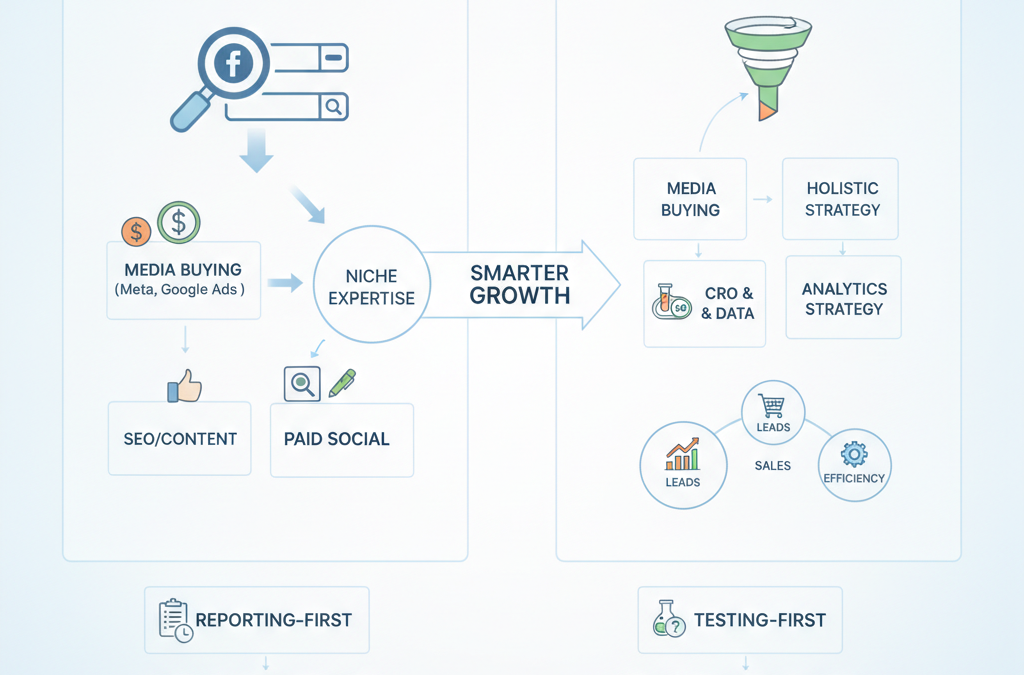
For HVAC companies, marketing performance is not about getting more clicks for the sake of traffic. It is about turning searchers into booked service calls, quote requests, maintenance plan inquiries, installation estimates, and repeat customers. Performance marketing agencies help connect ad spend, search visibility, landing pages, call tracking, and conversion data so HVAC contractors can understand which campaigns are actually creating business opportunities.
That matters because HVAC demand is often urgent, local, and seasonal. A homeowner searching for furnace repair, emergency AC service, ductless installation, or heat pump replacement is usually comparing several companies quickly. For a broader explanation of how agencies measure spend against real outcomes, this guide on performance marketing agencies explains the core idea behind smarter growth through measurable campaigns.
In an HVAC context, the same principle applies: campaigns should be judged by qualified calls, form submissions, booked estimates, and customer acquisition cost rather than impressions alone. Before increasing ad budgets, many contractors also need stronger tracking, clearer service pages, better local search visibility, and a website experience that makes it easy for customers to request help. For businesses reviewing broader online growth options, Digital Marketing Services can provide useful context.
What Performance Marketing Means for HVAC Companies
Performance marketing for HVAC businesses focuses on measurable actions. Instead of simply promoting a brand, campaigns are built around outcomes such as phone calls, estimate requests, booking forms, financing inquiries, or service-area leads. This makes it especially useful for HVAC contractors because many services have clear buyer intent.
For example, someone searching for “AC repair near me” may need immediate help, while someone searching for “new furnace installation cost” may be researching a larger project. A performance-focused agency should understand how to separate these searchers, build campaigns around the right intent, and send each visitor to a page that matches the service they need.
That is why HVAC marketing rarely works well when ads are treated as a standalone tactic. Paid search, local SEO, Google Business Profile visibility, website speed, landing page copy, call tracking, and follow-up processes all influence results. Many HVAC companies pair search campaigns with Google Ads Management and conversion-focused page improvements so traffic has a clearer path to becoming a lead.
Why HVAC Contractors Need Measurable Marketing
HVAC companies often compete in crowded local markets where customers make decisions quickly. During peak heating or cooling seasons, paid ads can become expensive, and broad campaigns may waste budget on searches that do not match the company’s services, service area, or job priorities.
Performance marketing helps reduce that waste by focusing on questions such as:
- Which services generate the most qualified leads? Repair, replacement, maintenance, indoor air quality, ductwork, or commercial HVAC may perform differently.
- Which locations produce real opportunities? Service-area targeting matters for contractors that only cover certain cities, neighbourhoods, or regions.
- Which search terms are too broad? Not every HVAC-related click is useful, especially when users are looking for DIY advice, jobs, parts, or manuals.
- Which pages convert visitors into calls? A campaign may fail if the landing page is unclear, slow, or missing trust signals.
- Which leads become customers? Call quality and follow-up matter as much as lead volume.
Without clean measurement, an HVAC business may see clicks and impressions but still struggle to understand whether marketing is improving revenue opportunities. A performance marketing agency should help close that gap.
What Performance Marketing Agencies Do for HVAC Businesses
A performance marketing agency serving HVAC companies usually works across several connected areas. The goal is not only to launch ads, but to build a system that shows which channels, campaigns, services, and pages are producing qualified customer actions.
Paid Search Campaign Management
Paid search is often important for HVAC because customers frequently search when they have immediate needs. Campaigns may target furnace repair, AC repair, heat pump installation, boiler service, ductless systems, commercial HVAC, emergency HVAC, or seasonal maintenance. A strong agency should structure campaigns by service type, location, urgency, and intent rather than using one generic campaign for everything.
Landing Page and Website Improvements
Even well-targeted ads can underperform if visitors land on a generic homepage. HVAC landing pages should usually make the service clear, show the service area, include visible phone numbers, explain next steps, and make it easy to request help. Page speed and mobile usability are especially important because many emergency searches happen on phones.
Call Tracking and Conversion Tracking
HVAC leads often come through phone calls, not only forms. A performance-focused agency should help track calls, contact forms, booking buttons, and other meaningful actions. If tracking is incomplete, campaign reports can become misleading because the business cannot clearly see which ads or pages are creating real inquiries.
Local SEO and Google Business Profile Support
HVAC is highly local. Customers often compare map listings, reviews, service areas, and nearby providers before calling. For that reason, paid campaigns may work better when supported by local SEO, service-area pages, and Google Business Profile optimization.
Reporting and Optimization
Reporting should connect marketing spend to useful outcomes such as calls, forms, booked consultations, and lead quality. It should also show what is being changed over time: search terms, negative keywords, landing pages, budgets, location targeting, and conversion paths.
Choosing the Right Agency Model for an HVAC Company
Not every HVAC contractor needs the same type of marketing partner. The right fit depends on the size of the business, the service area, the current website, available internal resources, and whether the company needs more repair calls, installation leads, maintenance plan signups, or commercial opportunities.
Channel Specialist
A channel specialist focuses on one area, such as paid search or paid social. This can work well for an HVAC company that already has a strong website, clear tracking, and someone internally managing local SEO, content, and website updates.
- Best fit: HVAC businesses with existing marketing support that only need sharper paid media execution.
- Potential limitation: If landing pages, tracking, or local SEO are weak, a narrow ad-only approach may not solve the full problem.
Full-Funnel Performance Agency
A full-funnel agency connects paid ads, SEO, landing pages, analytics, and conversion improvements. This model is often a better fit for HVAC companies that need fewer handoffs and want one team to look at the entire customer journey from search to booked call.
- Best fit: Contractors that need help with strategy, implementation, tracking, and ongoing campaign improvement.
- Potential limitation: The scope should be clearly defined so the business understands what is included and what is not.
In-House Support Partner
Some HVAC companies already have internal staff handling content, dispatch coordination, or website updates. In that case, an agency may act as a technical and strategic partner, helping with audits, analytics, paid campaigns, and specialist recommendations.
- Best fit: Growing HVAC companies with internal capacity but limited specialist expertise.
- Potential limitation: Clear ownership is needed so recommendations are actually implemented.
What HVAC Companies Should Check Before Hiring a Performance Marketing Agency
Choosing a performance marketing agency should involve more than reviewing a sales presentation. HVAC contractors should ask practical questions about tracking, service-area targeting, call quality, landing pages, and how the agency handles seasonal demand.
- Conversion tracking: Can the agency track calls, forms, booking requests, and other meaningful actions?
- Lead quality: Does reporting separate useful HVAC inquiries from irrelevant calls, job seekers, vendors, or out-of-area leads?
- Service segmentation: Are campaigns organized by repair, installation, maintenance, commercial work, and other important service lines?
- Location targeting: Does the strategy reflect the company’s actual service area?
- Landing page support: Can the agency recommend or implement improvements when pages are limiting conversions?
- Seasonal planning: Does the agency adjust priorities around cooling season, heating season, tune-ups, and emergency demand?
- Reporting clarity: Do reports explain what changed, why it changed, and how those changes relate to leads?
If an agency cannot clearly explain how it measures HVAC leads and improves campaigns over time, the relationship may become activity-focused rather than outcome-focused.
SEO vs PPC for HVAC Lead Generation
HVAC companies often need both SEO and PPC, but the role of each channel is different. PPC can help capture immediate demand from people searching for urgent repair or installation services. SEO supports longer-term visibility for service pages, location pages, maintenance topics, and informational searches that help customers compare options.
Paid search may be useful when an HVAC company wants faster feedback on which services, offers, and locations generate inquiries. SEO is usually more gradual, but it can help reduce long-term dependence on paid traffic when service pages and local visibility improve.
When PPC Often Fits
- Emergency HVAC repair campaigns
- Seasonal AC or furnace demand
- New service area expansion
- Testing messaging for installation or replacement offers
- Promoting specific services with high purchase intent
When SEO Often Fits
- Building durable visibility for core HVAC services
- Improving local search presence
- Supporting service-area pages
- Answering common homeowner questions
- Creating a stronger foundation for long-term lead generation
A performance marketing agency should be able to explain how both channels work together instead of treating SEO and PPC as unrelated efforts.
Common HVAC Marketing Bottlenecks
When HVAC campaigns underperform, the issue is not always the ad platform. Often, the real problem is somewhere else in the marketing and sales system.
- Unclear service pages: Visitors may not immediately understand whether the company offers the exact repair, replacement, or maintenance service they need.
- Weak mobile experience: Many HVAC searches happen on mobile devices, especially urgent repair searches.
- Incomplete call tracking: If phone calls are not tracked properly, campaign performance can be difficult to judge.
- Broad keyword targeting: Generic HVAC terms can attract research traffic, DIY searches, or irrelevant clicks.
- Poor location alignment: Ads may reach users outside the company’s practical service area.
- Slow follow-up: Leads can lose value if calls, forms, or estimate requests are not handled quickly and consistently.
- Generic offers: A single message may not work for emergency repairs, tune-ups, replacements, and commercial HVAC prospects.
A good performance marketing process identifies these issues before simply increasing spend.
How Local HVAC Businesses Can Compete Online
Local HVAC competition can be intense because customers often compare several providers in one search session. Strong performance usually comes from aligning campaigns, pages, and local signals around the customer’s immediate need.
For example, a page about emergency furnace repair should not feel the same as a page about annual maintenance or a heat pump installation estimate. Each service has different urgency, decision factors, and conversion paths. The more closely marketing matches the customer’s intent, the easier it becomes to measure and improve results.
Practical Ways to Improve HVAC Marketing Performance
- Build service-specific landing pages: Match ads and organic rankings to focused pages for repair, installation, maintenance, and replacement services.
- Use accurate service-area messaging: Make it clear where the company operates and avoid paying for irrelevant locations.
- Improve calls to action: Prominent phone numbers, booking forms, and estimate requests help reduce friction.
- Track meaningful conversions: Calls, forms, bookings, and qualified leads matter more than raw traffic.
- Review search terms regularly: Negative keywords can help reduce wasted spend from irrelevant searches.
- Connect marketing to operations: Dispatch capacity, response time, and appointment availability can influence lead value.
Questions to Ask a Performance Marketing Agency
Before signing with an agency, HVAC business owners should ask questions that reveal how the agency thinks about measurement and implementation.
- How will you track phone calls and form submissions?
- How do you define a qualified HVAC lead?
- Will campaigns be separated by service type and location?
- How do you handle seasonal changes in HVAC demand?
- What happens during the first 30 to 60 days?
- Who handles tracking setup and landing page recommendations?
- How often are search terms, budgets, and conversion data reviewed?
- How will reporting connect ad spend to actual customer inquiries?
Clear answers to these questions help separate agencies that understand lead generation from agencies that only report surface-level activity.
FAQs About Performance Marketing for HVAC Companies
What is performance marketing for HVAC?
Performance marketing for HVAC focuses on measurable outcomes such as phone calls, quote requests, booked appointments, and qualified service inquiries. It connects campaigns, landing pages, tracking, and reporting so contractors can see what is producing leads.
Do HVAC companies need both SEO and PPC?
Many HVAC companies benefit from both. PPC can capture urgent demand quickly, while SEO builds longer-term visibility for services, locations, and educational searches. The right mix depends on goals, competition, budget, and current website strength.
Why is call tracking important for HVAC marketing?
Many HVAC customers prefer to call, especially for urgent repairs. Without call tracking, it can be difficult to know which campaigns, keywords, or pages generated the inquiry.
Can performance marketing help with seasonal HVAC demand?
Yes. Campaigns can be adjusted around heating season, cooling season, maintenance periods, and emergency demand. The key is to align budgets, services, and landing pages with what customers are actively searching for.
What should an HVAC contractor look for in an agency?
Look for an agency that understands local lead generation, conversion tracking, paid search, SEO, landing pages, and service-area targeting. The agency should explain how it measures qualified leads, not just clicks or impressions.
Better HVAC Marketing Starts With Better Measurement
HVAC companies do not simply need more online activity. They need a clearer understanding of which campaigns create real service calls, which pages help customers take action, and which channels support profitable growth. Performance marketing agencies are most useful when they reduce guesswork and connect marketing decisions to measurable business outcomes.
If you are reviewing your HVAC marketing setup and want help evaluating SEO, PPC, landing pages, analytics, or conversion tracking, you can ask an SEO/PPC question for tailored guidance.


