
Optimizing HVAC Advertising: Advanced PPC Targeting Strategies for Toronto Contractors
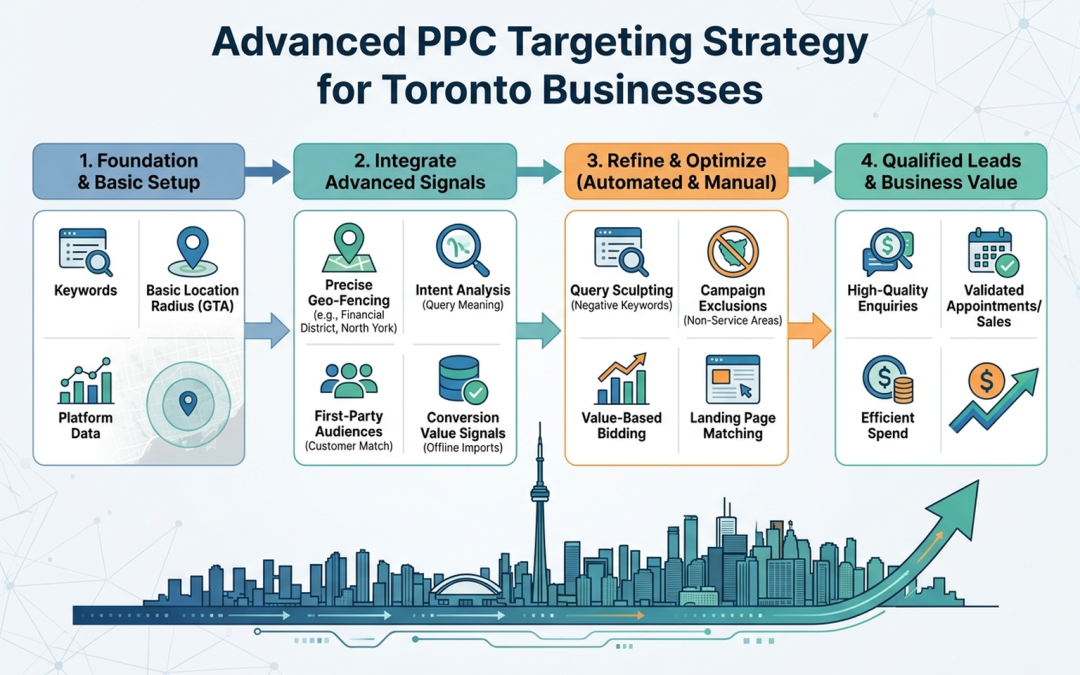
For HVAC businesses serving Toronto and the surrounding areas, advanced PPC targeting techniques go beyond simply increasing clicks. By integrating geographic precision, search intent analysis, first-party customer data, conversion quality insights, and strategic exclusions, HVAC contractors can ensure their advertising budget focuses on high-value prospects most likely to schedule service or request equipment installations. These tailored strategies help maximize ROI while providing systems with clearer data on which leads drive real business results.
Such methods are especially valuable for HVAC companies with established campaigns that track conversions consistently and have enough search volume to analyze performance. New advertisers in the HVAC sector might need simpler campaigns at first, but firms managing diverse services—like heating repairs, air conditioning installations, or maintenance contracts—across multiple Toronto neighborhoods can substantially benefit from this deeper targeting approach. Learn more about these PPC strategies in this comprehensive guide on advanced PPC targeting techniques for businesses in Toronto.

How Precision PPC Targeting Enhances HVAC Lead Generation in Toronto
Basic PPC campaigns for HVAC businesses usually define where ads appear and which keywords trigger them. Advanced targeting adds layers that reflect an individual’s location, the intent behind their search queries, previous interactions with your HVAC company, device type, time of day, and predicted conversion worth. Each factor influences how bids are placed, which customers qualify as leads, or which traffic is excluded to avoid wasting budget.
For example, a Toronto HVAC company might focus on service requests within specific city districts but still overspend if all conversions—such as contact form submissions, phone calls, and booked maintenance visits—are treated equally. Implementing reliable conversion tracking that differentiates between basic enquiries and qualified service bookings is essential. Importing offline data, like service invoices or confirmed appointments, further refines campaign targeting and bidding.
Automation tools like Google Ads’ smart bidding can process many signals more efficiently than manual management, but their effectiveness depends on accurate data and thoughtful campaign constraints. Effective Google Ads Management for HVAC must include ongoing search query analysis, negative keyword updates, landing page reviews, and communication between sales and marketing—not just automated bid adjustments.
Why Toronto’s Unique Geography Demands Careful HVAC PPC Targeting
Toronto spans neighborhoods and suburbs with vastly different customer needs, traffic patterns, and service accessibility. A generic radius around downtown may cover distant areas like Mississauga or Vaughan, where travel time and service capacity vary greatly for HVAC technicians. Effective location targeting should consider where HVAC service crews operate and how quick response times affect customer satisfaction.
Google Ads allows marketers to prioritize users physically located in a service zone rather than those simply searching about the area. HVAC providers targeting Toronto usually select location “presence” targeting to reach actual service calls, then exclude regions where delivering timely repairs or installations isn’t feasible or cost-effective.
Geographic Segmentation Aligned With HVAC Operations
- Downtown and Financial District: Focus on commercial HVAC clients with bids adjusted for weekday business hours and urgent service needs.
- North York and Scarborough: Separate campaigns may be appropriate due to differing residential demographics and varying service demands.
- Liberty Village & Employment Areas: HVAC maintenance contracts for office buildings could see bidding changes for daytime versus after-hours searches.
- GTA Expansion Zones: Distinct marketing efforts for services in Markham, Vaughan, or Brampton help allocate budgets effectively rather than lumping all under a broad Toronto radius.
Postal code targeting is another option, but can have data volume or platform constraints. Only segment geography when it leads to actionable differences—like pricing, appointment availability, or technician allocation—as unnecessary splits might complicate campaigns without benefits.
Utilizing Audience Data to Identify High-Intent HVAC Customers
Keywords give direct insight into search intent—for instance, “emergency furnace repair Toronto”—but adding audience signals offers richer context about potential customers. Is the searcher a first-time visitor learning about HVAC services or a returning client seeking maintenance? Are they in a segment with high lifetime value? Layering these insights can maximize ad relevance and conversion rates.
Using First-Party Audience Lists
Customer Match enables HVAC businesses to leverage their own client data, such as past booking history or maintenance contracts. For example, current customers can be excluded from acquisition-focused campaigns and targeted instead with upsell offers for new HVAC technologies or seasonal tune-ups. Remember to comply with Canadian privacy laws and platform rules for data consent and usage.
Remarketing Lists for HVAC Search Campaigns
Remarketing allows targeting previous website visitors differently—for example, showing a special promotion to those who viewed your AC installation service page but did not schedule an appointment. Adjusting bids based on this behavior can increase conversion likelihood and reduce wasted spend.
Observation Mode: Testing Audiences Without Restricting Reach
Before narrowing an HVAC campaign to only specific audiences, start with observation mode to monitor how different user groups perform. This approach provides valuable insights without limiting exposure prematurely.
An HVAC business evaluating ppc agency toronto options should inquire about how audience data is gathered and segmented, ensuring that only relevant signals inform bidding and creative adjustments.
Value-Based Bidding: Aligning HVAC Ad Spend with Qualified Leads
Volume-focused bidding often leads to high numbers of low-quality leads—think inquiries from property managers just gathering quotes or individuals outside the service area. Without distinguishing conversion value, automated systems may increase spending on these less profitable contacts.
Assigning distinct values to different HVAC outcomes—such as a qualified phone call, booked emergency repair, or signed maintenance contract—improves bidding precision. For lead generation, such data can be imported from CRM systems post-sales team qualification, giving platforms higher fidelity signals.
Structuring HVAC Conversion Hierarchies
- Primary conversions: Confirmed repair bookings, installation appointments, or emergency call durations meeting quality thresholds.
- Secondary conversions: Website engagement metrics like brochure downloads or video views—valuable but not core bidding drivers.
- Offline outcomes: Import sales, contracts, or qualified lead data from HVAC CRM systems where privacy allows.
- Enhanced conversions: Use privacy-respecting features to improve attribution accuracy, where supported.
Working with a lead generation agency toronto familiar with HVAC can help set up GA4, Google Tag Manager, call tracking, and dashboards that connect paid ads to real business growth.
Query Sculpting to Filter Out Non-Commercial HVAC Traffic
Modern keyword match types capture variant phrases and intent, but this can also lead to unwanted clicks. Regular search term reviews remain vital.
Negative keywords help remove traffic irrelevant to your HVAC services. This may include searches related to HVAC training, jobs, DIY repairs, or free HVAC educational content unless those align with business goals.
Common Negative Keyword Patterns for HVAC PPC
- Employment-related terms: Exclude keywords like careers, jobs, salaries unless recruitment is targeted.
- DIY and educational terms: Filter out searches for “how to fix furnace” or “HVAC courses” when these don’t convert.
- Non-provided services: Block searches for HVAC services outside your scope, like commercial HVAC if you focus on residential.
- Out-of-service areas: Exclude city or region names where technicians do not operate.
For example, an HVAC company bidding on “Google Ads management Toronto” wouldn’t want their campaigns triggered by users seeking training courses on Google Ads. Similarly, careful negative keyword management ensures HVAC PPC stays focused on qualified lead generation.
Balancing Campaign Segmentation with Automation for HVAC Success
Tightly segmented search campaigns grant HVAC businesses granular control over budgets and messaging, ideal when service types, territories, or margins vary. Conversely, more consolidated campaigns provide automated bidding with larger data sets, potentially improving performance but reducing precision control.
| Structure | Suitable for | Trade-offs |
|---|---|---|
| Segmented HVAC campaigns | Diverse services, multiple territories, varying lead values | Greater control but longer data accumulation times |
| Consolidated campaigns | Similar HVAC services with unified objectives | Faster automation but less budget granularity |
| Performance Max with search | E-commerce of HVAC products or companies with rich creative assets | More inventory but less direct query reporting and bidding control |
Segmentation should be aligned with operational realities; for instance, separating emergency repair requests from scheduled maintenance bookings due to differences in urgency and resource allocation. Splitting campaigns too finely without volume can limit effective automated bidding.
Matching Landing Pages to HVAC PPC Targeting for Maximum Conversions
Even the most precise targeting fails if the landing page does not clearly confirm the advertised HVAC service. The page must align with the user’s search—whether for furnace installation, air conditioning repair, or duct cleaning—and reflect the specific Toronto neighborhood if applicable.
An HVAC-focused conversion rate optimization toronto approach reviews form design, prominent call buttons, trust-building elements, mobile speed, and consistent messaging. Testing should measure qualified service requests or booked appointments, not just button clicks. Partnering with professional Website Design & Development services ensures technical barriers to tracking and user experience are minimized.
Strong ad relevance and organic SEO often go hand in hand. Clear site architecture supports both paid landing pages and technical seo services critical for sustained HVAC business growth. HVAC firms searching for a website design toronto partner should confirm that tracking and conversion pathways are integrated from project start.
Choosing the Right Digital Marketing Partner for Your HVAC Business
An experienced digital marketing agency toronto working with HVAC contractors will clearly link targeting decisions to measurable business goals such as booked service calls or signed contracts, not just clicks or impressions.
Effective reporting covers spend, search trends, lead volume, lead quality, sales conversion, and campaign efficiency. Any significant changes in campaigns should be documented to understand performance fluctuations tied to budget, targeting, creative content, market factors, or website updates.
When evaluating a marketing agency gta versus a specialized PPC firm, HVAC businesses should consider whether they need broader support including analytics, landing page optimization, product-feed management, or integration with sales systems.
Essential Questions Before Engaging an Agency
- Measurement control: Who manages Google Ads, GA4, Tag Manager, and reporting?
- Lead-quality integration: How does sales feedback influence bidding and targeting?
- Change documentation: Is there a clear log of budget, keyword, audience, and creative updates?
- Cross-channel expertise: Can the agency support SEO, CRO, web development, and PPC to maximize results?
Factors Influencing Returns on HVAC PPC Campaigns
Successful HVAC advertising depends on more than just cost-per-click. Other factors include local search demand, competition levels, website effectiveness at converting visitors, lead qualification rigor, sales response times, and the average value of customers including repeat business.
Many HVAC service providers search terms like digital marketing toronto or online marketing toronto and find agencies offering multiple channels. The key distinction lies in how each agency defines success and resolves performance bottlenecks, focusing not only on impressions and clicks but also connecting spend to qualified service calls and booked jobs.
An HVAC PPC Performance Scorecard
- Search relevance: Ensure actual queries reflect the HVAC services and neighborhoods you serve.
- Conversion tracking precision: Accurately capture forms, calls, sales, and filter duplicates.
- Lead qualification: Track the proportion of enquiries meeting sales acceptance criteria.
- Business outcome alignment: Relate ad spend to booked jobs, contract value, and profits where possible.
- Operational harmony: Confirm campaign volume matches tech capacity, staffing, and appointment availability.
Integrating SEO and PPC for HVAC Marketing in Toronto
PPC provides quick visibility for targeted HVAC queries, while SEO builds sustained organic presence via optimized content, site structure, and domain authority. Paid ads allow flexible budget control and fast experimentation; SEO typically requires more time but supports broader search visibility and better long-term lead flow.
HVAC companies weighing seo services toronto versus paid campaigns should consider how urgently leads are needed, current search rankings, tracking maturity, and sales team bandwidth. PPC often works well to launch new services or fill gaps, while SEO excels for steady demand in established HVAC categories.
Combining both channels smartly magnifies results. Insights from PPC search terms can inform SEO content priorities, while organic page performance can optimize PPC ad messaging. HVAC businesses comparing an seo company toronto alongside paid search specialists should gauge how findings are shared across teams rather than siloed.
SEO Services bolster HVAC service page rankings, while Google Ads (PPC) gives instant access to high-intent consumers in Toronto. Budget allocation should mirror business priorities and measurable targets.
Strategies for HVAC Businesses to Outperform Larger Competitors in Toronto
Smaller HVAC operators rarely benefit from attempting to match the broad reach of national advertisers. A focused approach targeting profitable HVAC services within well-defined Toronto neighborhoods—aligned with technician availability and billing rates—generates more qualified leads without wasted impressions.
Local online visibility extends beyond PPC. Optimizing your google business profile optimization improves map presence and trust, while local seo gta boosts relevance in nearby searches. For HVAC sales cycles that involve research and education, content marketing toronto builds trust by addressing common questions before prospects contact you.
For example, a coordinated campaign might target urgent furnace repair searches in downtown Toronto, support organic service pages for North York and Scarborough, and remarket to prospects who browsed your air conditioning services but didn’t book. Precision and consistent messaging outperform attempts to capture every possible related search.
Four Keys to Local HVAC PPC Success
- Service focus: Prioritize campaigns for HVAC offerings with strong margins and technician capacity.
- Geographic discipline: Separate Toronto and GTA zones when operational costs and sales processes differ.
- Consistent messaging: Align keywords, ads, landing pages, and follow-up communications around customer needs.
- Quality feedback loop: Incorporate sales-accepted lead data to refine targeting and reduce low-value traffic.
Preparation Checklist Before Scaling Your HVAC PPC Budget
Advanced targeting relies on accurate data. Before increasing budgets, confirm that your location targeting matches true service areas, conversion goals represent valuable commercial outcomes, and sales feedback integrates with your advertising platforms.
- Use presence-based geographic targeting focused on where HVAC technicians can reliably serve clients in Toronto.
- Start with audience observation before restricting campaigns to narrow segments.
- Distinguish primary conversions like booked repairs from softer engagement events.
- Regularly review search terms and update negative keywords to maintain campaign relevance.
- Consolidate campaigns unless specific budgets, goals, territories, or customer values justify segmentation.
- Focus analysis on qualified leads and booked jobs, not just click counts.
Can your reporting identify which campaigns deliver accepted service appointments or contracts rather than mere form fills? This insight is crucial before advancing to value-based bidding and automation.
FAQs About Advanced PPC Targeting for HVAC Businesses in Toronto
Target only areas where your HVAC team can consistently and profitably provide service. Segment Toronto neighborhoods or GTA cities when they differ operationally in budget, travel time, or staffing. Avoid excessive segmentation that reduces automated bidding effectiveness.
Audience data enriches understanding but does not replace the immediate intent revealed by search queries. A successful HVAC campaign uses keywords, ongoing query review, audience observation, location controls, and conversion quality signals together. Restricting audiences too early risks losing valuable demand.
Implement value-based bidding when your conversion tracking reliably distinguishes outcomes with different business values—such as booked emergency service calls versus general enquiries—and when offline CRM data can feed back qualified leads or sales.
Review frequency depends on spend, query volume, and campaign stability. New or expanding HVAC campaigns need closer attention. Continue search-term analysis even with automation, as matching behavior and customer demand evolve over time.
Combine Google Ads data with call tracking, lead form details, CRM stages, conversion acceptances, sales outcomes, and geographic performance. Assess metrics by service area, device, time, query, and landing page since platform conversions alone don’t confirm lead quality.
Additional Digital Marketing Services Supporting HVAC PPC Success
These service areas complement PPC efforts by improving tracking, landing pages, and organic search presence essential for HVAC growth.
Partner with Experts to Build an HVAC PPC Plan Focused on Qualified Leads
Zigma Internet Marketing provides Google Partner-certified expertise tailored for Toronto HVAC businesses, combining campaign tracking, search query management, optimized landing pages, CRO, and transparent KPI reporting. Based in Markham and serving the GTA, they emphasize metrics tied to calls, forms, confirmed sales, and cost-effective acquisition.
Ready to refine your HVAC PPC targeting, enhance conversion quality, or prioritize your advertising budget? Contact Zigma Internet Marketing at (647) 556-6071 or email info@zigma.ca.
Request a PPC strategy and pricing review
Discuss your Toronto HVAC service areas, quality lead signals, data gaps, and landing-page needs with Zigma Internet Marketing.


