
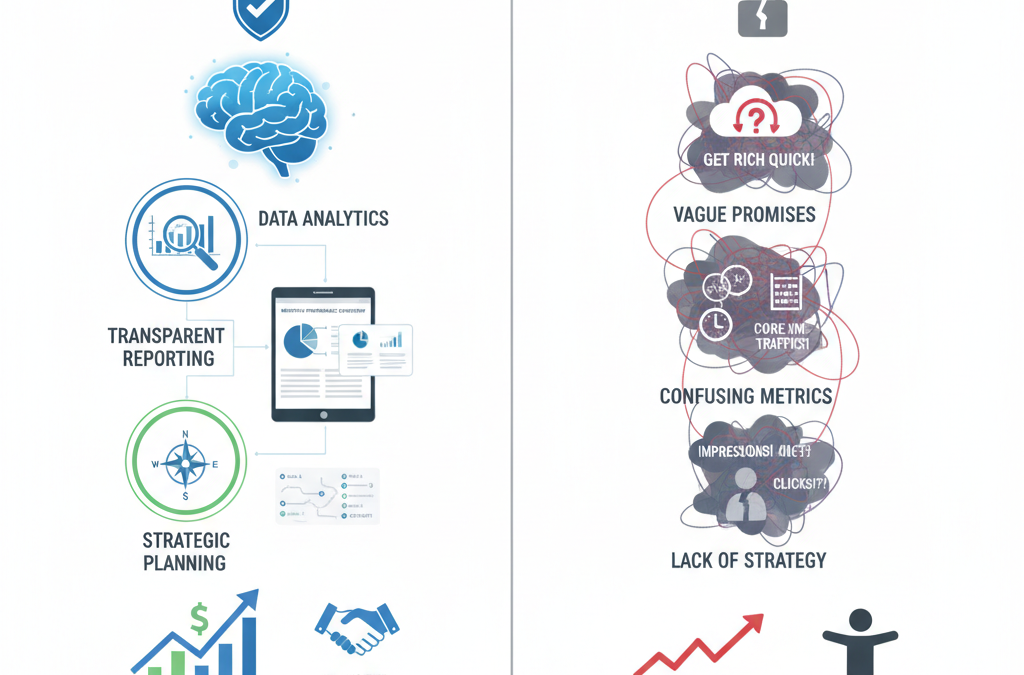
For HVAC contractors, marketing is not just about getting more website visits. It is about generating service calls, installation enquiries, maintenance plan leads, emergency repair bookings, and quote requests that your team can actually follow up on. The best digital marketing agencies understand this and use data to connect marketing activity with real business outcomes.
When an HVAC company compares agencies, the goal should be to find a partner that can explain where leads come from, which campaigns are producing useful enquiries, and where budget is being wasted. This data-first approach is also discussed in Zigma’s article on how the best digital marketing agencies earn trust with data, and it is especially relevant for home service businesses where seasonality, urgency, location, and call quality matter.
A strong agency should be able to explain SEO, Google Ads, landing pages, call tracking, conversion optimization, website performance, and reporting in practical terms. For HVAC businesses, that means showing how each channel supports booked appointments, replacement estimates, repair calls, and long-term customer growth.
Why HVAC Marketing Requires More Than Generic Lead Generation
HVAC companies operate in a competitive and time-sensitive market. A homeowner searching for emergency furnace repair, AC installation, heat pump service, or ductless system support often needs help quickly. If your marketing agency treats every lead the same, it may miss important differences between urgent repair calls, high-value replacement opportunities, and low-intent browsing traffic.
The right agency should understand how local search, paid ads, mobile usability, service-area pages, reviews, tracking, and fast landing pages work together. A campaign that brings traffic but does not produce calls or form submissions is not enough. Likewise, a high volume of enquiries is not valuable if the calls are outside your service area or unrelated to your core services.
HVAC marketing should be built around measurable actions, including phone calls, booking forms, quote requests, maintenance plan enquiries, and service-specific landing page conversions. Without those signals, it becomes difficult to know whether the agency is improving business results or simply increasing surface-level metrics.
What the Best Digital Marketing Agencies Track for HVAC Companies
Trustworthy agencies do not rely on vague monthly updates. They set up tracking that helps an HVAC business understand what is working and what needs to change. For contractors, that usually includes lead source, service type, location, call quality, landing page performance, keyword intent, and campaign cost.
A complete marketing plan may involve organic search, paid search, web design, content, analytics, and conversion improvement. If you are reviewing what a full-service structure can include, Zigma outlines these areas under its Digital Marketing Services, including SEO, paid advertising, website work, content, social campaigns, and reporting.
- Call tracking: HVAC leads often happen by phone, so campaigns should show which ads, pages, or keywords generated calls.
- Form tracking: Quote requests, maintenance plan forms, and contact forms should be tracked as separate conversion actions when possible.
- Location performance: Service-area campaigns should show which cities, neighbourhoods, or regions produce useful leads.
- Service-type intent: Furnace repair, AC installation, heat pump replacement, and tune-up searches may have different value and urgency.
- Landing page behaviour: Pages should be reviewed for mobile usability, clear calls to action, trust signals, and load speed.
SEO for HVAC Companies: Long-Term Visibility in Local Search
Search engine optimization is important for HVAC companies because many customers begin with local searches such as repair services, installation options, maintenance plans, or brand-specific system questions. A strong SEO strategy should help your website appear for relevant service and location searches while also supporting trust and usability.
HVAC SEO usually includes technical website improvements, service page optimization, location page structure, internal linking, content planning, review signals, and clear conversion paths. It should not be limited to ranking reports. The real question is whether organic visibility is helping attract qualified visitors who contact your business.
If your HVAC company is comparing organic search options, reviewing dedicated SEO Services can help clarify what should be included, such as technical SEO, content strategy, on-page optimization, and performance reporting.
Google Ads for HVAC: Fast Demand, Careful Budget Control
Paid search can be useful for HVAC companies because it allows campaigns to target specific services, locations, and urgent search intent. However, HVAC advertising can also waste money quickly if campaigns are not managed carefully. Broad keywords, weak negative keyword lists, poor landing pages, and incomplete conversion tracking can all reduce performance.
A credible agency should be able to explain how it will structure campaigns for repair, replacement, installation, maintenance, and emergency services. It should also show how budgets are allocated, how search terms are reviewed, and how conversion quality is checked.
When comparing paid search support, look at how Google Ads Management is approached. For HVAC companies, campaign management should include keyword control, ad testing, landing page review, conversion tracking, and ongoing adjustments based on actual lead quality.
Your HVAC Website Is Part of the Marketing System
Even strong SEO and paid ads can underperform if the website creates friction. HVAC customers often visit from mobile devices, especially during urgent repair situations. If the phone number is hard to find, forms are too long, pages load slowly, or service information is unclear, potential customers may contact a competitor instead.
An HVAC website should make it easy for users to understand what services you provide, where you work, how to contact you, and why they should trust your company. Clear service pages, visible calls to action, financing information where applicable, review placement, emergency service messaging, and simple quote request forms can all support conversion.
If the website is limiting campaign performance, Website Design & Development may need to be treated as part of the marketing plan rather than a separate design project. For HVAC companies, the website is often the bridge between search visibility and booked appointments.
How to Evaluate a Digital Marketing Agency for an HVAC Business
Before signing with an agency, HVAC business owners should look beyond polished presentations and long service lists. The best digital marketing agencies ask detailed questions before recommending a plan. They want to understand your service area, seasonal demand, installation goals, repair capacity, call handling process, average job types, and current website limitations.
Use these questions during agency conversations:
- How will you track phone calls and form submissions? HVAC companies need visibility into both call volume and lead source.
- How will you separate repair, replacement, and maintenance leads? Different service categories may require different campaigns and reporting.
- How will you measure lead quality? The agency should consider location, service type, call intent, and sales feedback.
- What needs to be fixed before scaling ads? Listen for tracking setup, landing pages, website speed, service page clarity, and conversion paths.
- How will reporting guide next steps? Reports should explain what changed, what the data shows, and what action comes next.
Warning Signs When Comparing Marketing Agencies
Not every agency is a good fit for HVAC companies. Some agencies focus heavily on impressions, clicks, or traffic without showing whether those actions lead to actual enquiries. Others may recommend the same package to every business without considering service area, seasonality, emergency demand, or installation goals.
Be cautious if an agency:
- Promises results without reviewing your current data: A serious strategy starts with diagnosis.
- Ignores call tracking: Phone calls are often central to HVAC lead generation.
- Reports only traffic and clicks: HVAC businesses need conversion and lead-quality reporting.
- Does not review landing pages: Campaign performance depends heavily on the page users visit after clicking.
- Treats SEO and PPC as unrelated: Search term data, landing page insights, and conversion results should inform both channels.
Why SEO, PPC, Content, and Conversion Tracking Should Work Together
HVAC marketing performs best when channels share data. PPC can reveal which search terms and offers generate enquiries quickly. SEO can build long-term visibility for important service and location searches. Content can answer homeowner questions, support service pages, and help users compare repair, replacement, and maintenance options.
Conversion tracking connects these activities to business outcomes. Without it, an agency may not know whether a page is attracting the wrong audience, whether an ad is producing low-quality calls, or whether a service-area page needs a clearer call to action.
- Use SEO for long-term local visibility: Service pages, location pages, and helpful content can support organic search growth over time.
- Use PPC for faster testing: Paid search can test keywords, locations, offers, and landing pages more quickly.
- Use content to support customer decisions: Homeowners often research costs, system options, warning signs, and maintenance questions before contacting a contractor.
- Use CRO to improve enquiries: Conversion rate optimization reviews forms, calls to action, page layouts, and trust signals.
- Use reporting to refine the plan: Monthly reports should help decide what to scale, pause, test, or fix next.
What Monthly Reporting Should Show
Useful HVAC marketing reports should go beyond rankings and clicks. They should help you understand whether campaigns are producing qualified leads and whether the agency is making informed improvements.
A practical report may include:
- Phone calls and form submissions by source
- Top-performing services and locations
- Conversion rate by landing page
- Google Ads search term review and negative keyword updates
- Organic traffic and ranking movement for important service pages
- Website or technical fixes completed
- Content published or updated
- Next actions based on the data
The most important part of reporting is interpretation. A good agency should explain what the numbers mean and how the next month’s work will respond to those signals.
FAQs About Choosing the Best Digital Marketing Agencies for HVAC
What makes a digital marketing agency a good fit for an HVAC company?
A good fit understands local service demand, phone-call tracking, emergency repair searches, installation lead value, service-area targeting, and the importance of fast mobile landing pages. The agency should connect marketing activity to booked appointments and qualified enquiries.
Should HVAC companies use SEO or Google Ads first?
It depends on goals, budget, competition, and website condition. Google Ads can provide faster testing and lead data, while SEO builds longer-term visibility. Many HVAC companies benefit from using both with shared reporting.
Why is call tracking important for HVAC marketing?
Many HVAC customers prefer to call, especially for urgent repair needs. Call tracking helps show which campaigns, keywords, and pages generated phone enquiries so the agency can improve budget allocation and campaign strategy.
How long does it take to evaluate marketing performance?
Paid search can provide early signals within a shorter period if tracking is set up correctly. SEO usually requires more time because technical improvements, content updates, crawling, indexing, and authority signals develop gradually.
What should an HVAC company ask before hiring an agency?
Ask how tracking will be set up, how lead quality will be reviewed, how service-area targeting will work, how website issues will be handled, and how reporting will guide monthly decisions.
A Practical Takeaway for HVAC Business Owners
The best digital marketing agencies make performance easier to understand. For HVAC companies, that means clear tracking, service-specific strategy, strong landing pages, local search visibility, disciplined paid ads, and reporting that supports better decisions.
If you are unsure whether your current SEO, PPC, website, or tracking setup is helping your HVAC business generate qualified enquiries, you can ask an SEO/PPC question and share the context behind your marketing goals.


