
Why internet advertising matters for HVAC contractors
Internet advertising is the paid promotion of an HVAC business through digital channels such as Google Search, local map placements, display networks, social media platforms, video platforms, and remarketing campaigns. For heating and cooling companies, it can help place services like furnace repair, air conditioning installation, heat pump replacement, ductless mini-split service, or emergency HVAC repair in front of homeowners and property managers when they are actively looking for help.
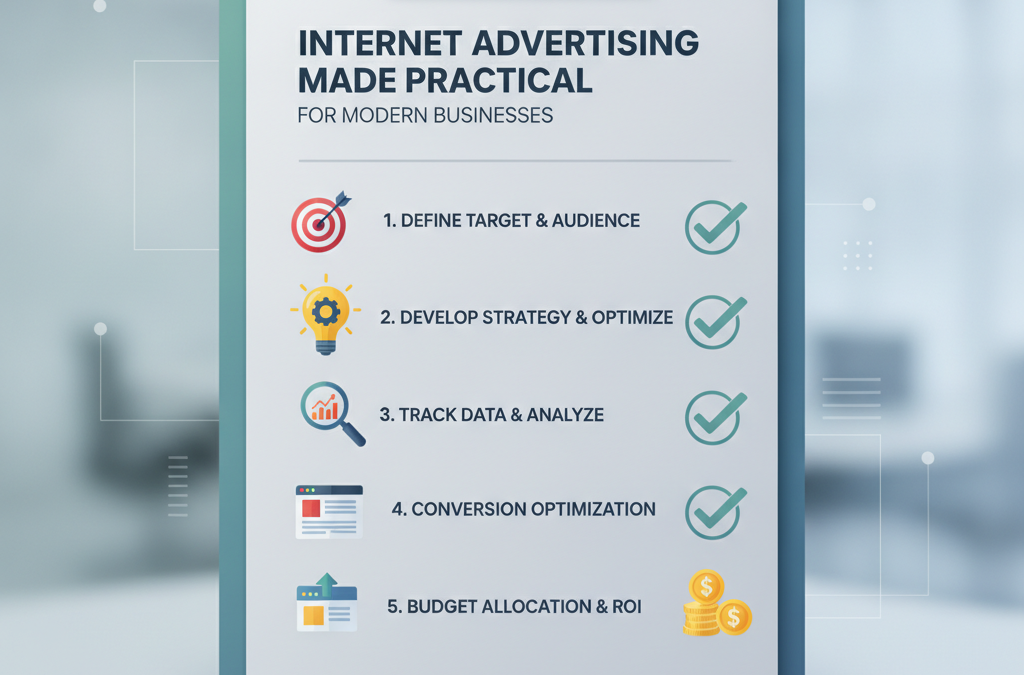
For a broader explanation of the digital marketing fundamentals behind paid promotion, this guide on internet advertising for modern businesses explains how paid channels connect targeting, tracking, landing pages, and conversion goals. For HVAC companies specifically, the same principles apply, but the campaign structure should reflect seasonal demand, urgent search intent, service-area limits, and the difference between repair leads, replacement leads, and maintenance enquiries.
Paid advertising should not replace long-term organic visibility. Many HVAC businesses use paid campaigns alongside SEO Services because PPC can support immediate visibility while SEO builds stronger search presence over time. The most effective approach is usually not “ads or SEO,” but a coordinated system where paid traffic, local search, website quality, and conversion tracking work together.
How internet advertising works for HVAC leads
At a practical level, internet advertising works by matching an HVAC company’s message with the right audience, location, service need, and timing. A contractor chooses the campaign type, target geography, service keywords, ad copy, budget, and conversion goal. The advertising platform then uses auctions, relevance signals, bidding strategy, and user intent to decide when and where ads appear.
For HVAC companies, search advertising is often especially important because many customers search when they already have a problem. Someone looking for “AC repair near me,” “furnace not heating,” or “emergency HVAC service” may be closer to booking than someone casually browsing home improvement content. This is where Google Ads Management becomes more than simply launching campaigns. It involves refining search terms, excluding irrelevant clicks, matching ads to service pages, tracking calls and forms, and adjusting bids based on actual lead quality.
The full path matters. A click from a homeowner is only useful if the landing page clearly explains the service, shows the company’s service area, makes contact easy, and supports trust. If tracking is incomplete or calls are not tied back to campaigns, the HVAC company may not know which ads are producing meaningful enquiries and which are only creating activity.
Which types of internet advertising fit HVAC business goals?
Different HVAC campaigns serve different purposes. Some are designed to capture urgent demand, while others support seasonal awareness, maintenance plan promotion, or follow-up with previous website visitors. Choosing the right campaign type helps prevent budget from being spent on attention that does not match the company’s actual service priorities.
Search-intent advertising for HVAC services
A) Search ads: Search ads place an HVAC company in front of people actively looking for heating, cooling, ventilation, or indoor air quality services.
- How it works: Ads appear for keyword-based searches, with performance influenced by bid strategy, ad relevance, landing-page quality, and location targeting.
- Best fit: This format suits emergency repair, seasonal service calls, equipment replacement, ductless systems, heat pumps, and local HVAC lead generation.
- Example: A campaign targeting “furnace repair near me” should send users to a page focused on furnace repair, not a generic homepage.
B) Local and map-driven advertising: Local campaigns help HVAC companies appear when nearby customers are searching for service providers.
- How it works: These campaigns use location signals, business profile data, service relevance, and proximity to connect local searchers with nearby providers.
- Best fit: This format suits HVAC contractors that rely on service-area calls, map visibility, reviews, and fast contact actions.
- Example: A company serving a defined metro area should avoid showing ads far outside the locations it can realistically service.
C) Service-specific landing-page campaigns: These campaigns are built around one high-value HVAC service rather than the entire company.
- How it works: Ads, keywords, and landing pages are aligned around one need, such as AC installation, boiler repair, heat pump service, or maintenance plans.
- Best fit: This format suits companies that want clearer lead quality and better message matching.
- Example: A heat pump replacement campaign should explain heat pump services directly and include a clear path to request an estimate.
Seasonal and awareness advertising
A) Social media advertising: Social ads can help HVAC companies stay visible before urgent demand appears.
- How it works: Ads are shown based on audience signals, location, interests, behaviours, and engagement patterns.
- Best fit: This format can support seasonal tune-up reminders, maintenance plans, financing awareness, indoor air quality education, and brand visibility.
- Example: Before summer, an HVAC company may promote AC maintenance reminders to local homeowners.
B) Display advertising: Display ads place visual promotions across websites and apps.
- How it works: Targeting may be based on audiences, topics, placements, geography, or remarketing lists.
- Best fit: This format is better for awareness and follow-up than for urgent repair intent on its own.
- Example: A homeowner who visited an AC installation page but did not submit a form may later see a reminder ad.
C) Video advertising: Video ads give HVAC businesses room to explain services that may require more education.
- How it works: Video campaigns use audience and contextual targeting across video platforms and related placements.
- Best fit: This format can help explain maintenance plans, equipment replacement options, indoor air quality solutions, or ductless systems.
- Example: A short video could introduce the difference between repair and replacement considerations without making unsupported claims.
Follow-up and efficiency campaigns
A) Remarketing: Remarketing reconnects with people who already visited the HVAC company’s website.
- How it works: Audience lists are built from previous website visits or platform engagement, then used for follow-up messaging.
- Best fit: This format suits longer-consideration services such as system replacement, maintenance memberships, ductwork, or indoor air quality upgrades.
- Example: A visitor who viewed a furnace installation page may later see a reminder to request an estimate.
B) Multi-network automation: Automated campaign types can place ads across multiple channels from one campaign structure.
- How it works: The platform uses assets, audience signals, conversion data, and bidding rules to distribute ads across eligible placements.
- Best fit: This can suit advertisers with strong tracking, clear conversion goals, and enough account data to guide optimization.
- Example: An HVAC company with reliable form and call tracking may test automation after its core search campaigns are organized.
C) Landing-page testing: Landing-page improvement is not an ad channel, but it often determines whether HVAC ad campaigns become more efficient.
- How it works: Page headlines, contact forms, phone buttons, trust signals, service-area messaging, and mobile layout are reviewed and refined.
- Best fit: This suits nearly every HVAC advertiser once traffic volume is steady enough to compare outcomes.
- Example: A mobile user searching for emergency heating repair should see a clear phone option quickly.
What HVAC companies should check before increasing ad spend
Increasing the budget does not automatically improve results. If targeting, tracking, landing pages, or follow-up are weak, more spending may only amplify the problem. Before expanding internet advertising, HVAC contractors should review the campaign basics that connect ad activity to booked calls, estimate requests, or maintenance enquiries.
Step 1: Define the main conversion
An HVAC campaign should be built around a clear conversion, such as a phone call, service request form, quote request, booking request, or maintenance plan enquiry. Without a defined conversion, the campaign may optimize for cheaper traffic rather than useful leads.
Main check: Confirm that the conversion can be tracked and is tied to a real business outcome.
Common issue: Counting all website visits as success can hide poor lead quality.
Example: A campaign for “emergency AC repair” should prioritize calls or urgent service forms, not general page views.
Step 2: Match campaign type to customer urgency
Not every HVAC service has the same decision timeline. Emergency repair searches often carry immediate intent, while system replacement, maintenance plans, and indoor air quality upgrades may require more consideration. Campaign type should reflect that difference.
Main check: Decide whether the customer is ready to contact a contractor now or needs education and follow-up first.
Common issue: Expecting awareness campaigns to generate the same immediate response as high-intent search ads.
Example: A “furnace repair near me” search campaign is usually more urgent than a general winter comfort awareness ad.
Step 3: Tighten service-area targeting
HVAC companies usually operate within defined service areas. Ads shown outside those areas can produce irrelevant clicks, wasted calls, or leads that cannot be served profitably.
Main check: Review location settings, service-area exclusions, and where leads are actually coming from.
Common issue: Using broad geographic targeting without checking whether the company can service every location included.
Example: A contractor serving one city and nearby suburbs should not automatically advertise across an entire province or state.
Step 4: Align ads with HVAC landing pages
The landing page should reflect the service promised in the ad. If someone clicks an ad about AC installation, the page should discuss AC installation clearly, not make the visitor search through a general services page.
Main check: Compare the ad headline with the first visible section of the landing page.
Common issue: Sending all paid clicks to the homepage, even when the campaign is service-specific.
Example: A heat pump ad should lead to a heat pump service or installation page with a clear next step.
Step 5: Review leads, calls, and search terms regularly
HVAC search behaviour changes with weather, seasonality, equipment issues, and local competition. Campaigns need ongoing review so irrelevant terms can be excluded and strong-performing services can be prioritized.
Main check: Review search term reports, call quality, form submissions, and actual booked jobs together.
Common issue: Judging performance only by clicks or platform-reported conversions without checking whether leads were useful.
Example: A campaign may generate many “DIY furnace troubleshooting” clicks, but those visitors may not be looking to hire a contractor.
What HVAC advertisers often learn after running campaigns
- Lead quality matters more than lead volume. A smaller number of qualified service calls can be more useful than a larger number of poor-fit enquiries.
- Seasonality affects intent. Heating and cooling demand can shift quickly, so ad messaging, budgets, and service focus may need adjustment throughout the year.
- Tracking must include calls. Many HVAC leads happen by phone, so form tracking alone may leave major gaps in reporting.
- Landing pages influence cost efficiency. Paid traffic becomes more valuable when visitors can quickly understand the service, service area, and next step.
- Search terms need supervision. Broad matching without exclusions can attract informational, employment-related, or DIY traffic that does not match the company’s goals.
How to choose a digital marketing partner for HVAC advertising
Choosing the right marketing partner can affect how efficiently an HVAC company turns ad spend into meaningful enquiries. A strong provider should understand how paid traffic connects with service-area targeting, landing pages, call tracking, local search, and long-term organic visibility. The goal is not just to buy clicks, but to create a system that helps the business understand what is producing calls, forms, estimates, and booked work.
It is useful to ask practical questions before hiring help. Who owns the ad account? How are phone calls tracked? How are search terms reviewed? Are poor-fit keywords excluded regularly? Are landing pages reviewed for conversion quality? How does reporting separate clicks from qualified leads?
For HVAC companies comparing a Digital Marketing Services provider, it is also worth looking at whether the team can support related needs such as analytics setup, local SEO, content alignment, website fixes, and conversion-rate improvements. Paid traffic often reveals issues elsewhere, especially if the website is slow, unclear, difficult to use on mobile, or missing service-specific pages.
What to screen for
- Ad account transparency: The HVAC business should retain access to its ad platforms, analytics, and conversion data.
- Call and form tracking: Reporting should identify which campaigns are producing contact actions, not only clicks.
- Service-area discipline: Location settings and exclusions should reflect where the company actually works.
- Search term management: The provider should review queries and remove irrelevant searches that waste budget.
- Landing-page accountability: Ads and pages should be reviewed together, especially for high-value services like installation and replacement.
- Cross-channel judgment: A capable team should know when paid ads should support SEO, local search, website improvements, or remarketing.
What shapes ROI in HVAC internet advertising?
ROI in HVAC advertising is shaped by more than the cost of a click. The quality of the search term, the urgency of the customer, the location of the lead, the clarity of the landing page, the speed of follow-up, and the accuracy of tracking all influence whether paid campaigns produce business value.
For example, a repair-related click may behave differently from a replacement-related click. A maintenance plan enquiry may have a different value from an emergency service call. A campaign can appear busy inside an ad platform while still underperforming if the enquiries are outside the service area, the caller needs a service the company does not offer, or the landing page does not make the next step clear.
HVAC companies should treat ROI as a chain of connected decisions. Better targeting, clearer service pages, accurate tracking, and consistent lead review all help the company make calmer budget choices. Instead of asking only whether ads are “working,” the better question is which services, locations, search terms, and pages are producing the most useful enquiries.
Common ROI drivers
- Search intent: Urgent service searches usually differ from broad research searches.
- Location relevance: Leads inside the service area are more useful than clicks from places the company does not serve.
- Landing-page clarity: Service-specific pages often give visitors a clearer path than generic pages.
- Mobile usability: HVAC customers often search from mobile devices, especially during urgent situations.
- Follow-up speed: Missed calls or slow responses can reduce the value of paid traffic.
- Tracking accuracy: Without reliable call and form tracking, budget decisions can drift away from real outcomes.
SEO vs PPC for HVAC companies
SEO and PPC are often compared as if one must replace the other, but they solve different timing problems. PPC can help an HVAC company appear quickly for selected searches and service areas. SEO builds organic visibility over time by improving website relevance, technical quality, local signals, and useful content.
If an HVAC business needs leads soon, paid search may provide faster visibility. If the company wants durable search presence and less reliance on purchased clicks over time, SEO becomes important. Many HVAC businesses use PPC to identify high-value search terms and then build stronger organic pages around those same service topics.
The website also matters in both cases. Strong campaign performance depends on pages that load well, explain services clearly, and make contact simple. For companies that need stronger service pages, mobile experience, or conversion-focused layouts, Website Design & Development can support both paid and organic performance.
A practical comparison
- SEO: Better for long-term visibility, service-area authority, educational content, and ongoing local search presence.
- PPC: Better for immediate visibility, seasonal pushes, urgent service campaigns, and testing which services generate demand.
- Blended strategy: Useful when an HVAC company wants near-term leads while building a stronger organic foundation.
How local HVAC companies can compete online
Local HVAC advertising is not only about budget size. Smaller contractors can compete more effectively when their campaigns are tightly focused on the right services, locations, and customer intent. A clear service area, accurate business information, strong local landing pages, and responsive follow-up can all help reduce wasted spend.
Local campaigns often work best when paid ads are supported by a complete local presence. That may include accurate business profile information, service-specific website pages, visible contact options, and messaging that reflects the customer’s actual need. A homeowner searching for emergency furnace repair should not have to dig through unrelated information before finding a phone number or service request option.
Ways HVAC advertisers improve local competitiveness
- Use tighter geography: Advertise where the company can realistically respond and perform service.
- Separate services: Build campaigns around distinct needs such as repair, installation, maintenance, or indoor air quality.
- Match pages to searches: Send users to the most relevant service page instead of a generic homepage.
- Track calls and forms: HVAC lead generation often depends on both phone and web enquiries.
- Review lead quality: Use real business feedback to understand which campaigns are producing useful opportunities.
Quick facts for HVAC internet advertising
- Paid traffic is measurable only when tracking is reliable. Broken call or form tracking can distort campaign decisions.
- Clicks are not the same as booked service calls. Lead quality and follow-up matter.
- Seasonal campaigns need regular attention. Heating, cooling, and maintenance demand can shift throughout the year.
- Generic landing pages can weaken results. Service-specific pages usually create a clearer experience for visitors.
- Negative keywords are important. Excluding DIY, job-seeker, or unrelated searches can protect budget.
FAQs About Internet Advertising for HVAC Companies
How fast can HVAC internet advertising start generating leads?
Paid campaigns can begin sending traffic shortly after launch, but useful leads depend on targeting, service-area settings, ad relevance, landing-page quality, call tracking, and follow-up. Early campaign data is often used to refine search terms, exclude irrelevant traffic, and improve lead quality.
Which HVAC services are best suited for paid search ads?
Paid search is often well suited to high-intent services such as emergency HVAC repair, furnace repair, AC repair, heat pump service, system installation, and replacement estimates. The best fit depends on the company’s service area, margins, availability, and lead-handling process.
What causes HVAC ad spend to get wasted?
Common causes include broad targeting, weak location controls, irrelevant search terms, missing negative keywords, generic landing pages, incomplete call tracking, and judging performance by clicks instead of qualified enquiries.
Should an HVAC company invest in SEO or PPC first?
The answer depends on timing and goals. PPC can support immediate visibility and faster testing, while SEO builds long-term search presence. Many HVAC companies use PPC for near-term lead generation while strengthening SEO for durable organic visibility.
What should HVAC companies ask before hiring an advertising agency?
Ask who owns the ad account, how phone calls and forms are tracked, how search terms are reviewed, how location targeting is managed, what reporting includes, and whether landing-page improvements are part of the process.
Clear next steps for HVAC companies reviewing internet advertising
Internet advertising works best for HVAC companies when campaigns are treated as part lead-generation system, part measurement system, and part website improvement process. If results feel inconsistent, the issue may not be paid advertising itself. The problem is often a weak connection between customer intent, ad message, service-area targeting, landing-page quality, tracking, and follow-up.
HVAC businesses that want clearer visibility into paid search, SEO, analytics, and website performance can benefit from a structured review of how those pieces work together. If tailored guidance would help, 📩 Ask an SEO/PPC question.


