
Laser hair removal is a light-based treatment that targets active hair follicles so future growth can become finer, slower, and significantly reduced over a planned series of visits. While it is not an HVAC service, the topic connects naturally to comfort: the best results depend on controlled energy, careful assessment, cooling, timing, and a comfortable environment before and after treatment.
For readers who think about comfort, temperature, and safety in technical terms, laser hair removal with safer, clearer treatment planning is a useful example of how controlled systems should be matched to the person, the setting, and the expected outcome. Just as HVAC equipment should not be selected without understanding the home, laser settings should not be chosen without understanding skin tone, hair colour, treatment area, sensitivity, and goals.
At Royal Laser and Skincare Clinic, certified aestheticians use the Soprano Ice system, a diode laser platform designed for comfortable treatment across all skin tones. The clinic’s approach is based on what the area actually needs rather than a fixed package count, with a results-focused policy and lifetime free touch-ups included under clinic policy. For treatment-area details, visit Laser Hair Removal.
Quick Facts: Laser Hair Removal and Comfort Planning
- What it does: Laser hair removal uses controlled light energy to heat active follicles and reduce future hair growth over time.
- Why planning matters: Skin tone, hair colour, recent tanning, medications, and sensitivity should be reviewed before treatment settings are selected.
- Comfort factor: Soprano Ice uses gradual heating and cooling to help manage treatment comfort.
- Home environment: Stable indoor temperature, reasonable humidity, and clean air can support skin comfort before and after appointments.
- Best next step: A consultation helps confirm whether your hair type, skin tone, and treatment area are a good match.
Why HVAC Readers Should Understand Laser Comfort Differently
HVAC professionals and homeowners often think in terms of load, airflow, humidity, equipment sizing, and control. Laser hair removal works in a different field, but the principle is familiar: energy must be delivered in the right amount, at the right time, with the right safeguards.
In HVAC, oversizing equipment, ignoring humidity, or skipping an assessment can create comfort problems. In laser treatment, skipping a consultation can lead to unrealistic expectations or poor planning. A proper assessment checks the client’s skin tone, hair type, treatment area, recent sun exposure, hair removal habits, medications, and comfort level before the provider selects settings.
This is especially important because not all hair responds the same way. Darker, coarser hair usually gives the laser a clearer target, while very light, grey, white, or red hair may respond differently. Hormonal factors such as PCOS or hirsutism can also affect treatment timelines.
How Laser Hair Removal Works
Laser energy is attracted to pigment in the hair shaft. The energy travels down to the follicle and heats the structure involved in growth. Because hair grows in cycles, one appointment cannot reach every follicle at the same active stage. That is why treatment is planned across multiple visits rather than completed in a single session.
Comfort depends on the device, technique, treatment area, and individual sensitivity. “Pain-free” laser hair removal usually refers to technology and methods that reduce discomfort with cooling, gradual heating, and steady movement over the skin. Many clients describe the feeling as warmth or a light snapping sensation rather than the pulling discomfort associated with waxing.
For men treating larger or coarser areas such as the back, chest, shoulders, or neck, planning may involve different timing and settings. Royal Laser and Skincare Clinic provides dedicated information through Laser Hair Removal for Men.
The Indoor Comfort Connection: Temperature, Humidity, and Skin
After a laser session, the skin may feel warm, sensitive, or mildly irritated. While aftercare instructions should always come from the clinic, your indoor environment can still affect how comfortable you feel at home. A room that is too hot may feel uncomfortable on recently treated skin, while overly dry air can make already sensitive skin feel tighter.
Good HVAC habits can support general comfort after appointments. That does not mean HVAC equipment changes laser results, but stable indoor conditions can make recovery feel easier. Reasonable cooling, balanced humidity, and clean filtration can help create a more comfortable setting when your skin is temporarily sensitive.
Home comfort considerations after treatment
- Avoid overheating: Keep indoor conditions comfortable, especially if the treated area feels warm.
- Watch dry air: Very dry indoor air can make skin feel tight or irritated.
- Maintain filtration: Clean filters support better indoor air quality, which is useful for overall comfort.
- Follow clinic instructions: HVAC comfort is only supportive; aftercare guidance should come from the treatment provider.
Choosing a Laser Hair Removal Clinic With the Same Care You Use for HVAC Decisions
Choosing a laser clinic should not be based only on price or a fixed number of sessions. Like selecting HVAC equipment or a contractor, the better decision comes from asking practical questions, understanding the technology, and knowing how the provider handles variables.
A strong clinic should assess your skin and hair before recommending a plan, explain how the device works, and be honest when a treatment area may take longer because of hair density, colour, hormones, or sensitivity. You should also understand whether you are paying for a fixed package or a result-based care model.
Questions worth asking before you start
- Who performs the treatment? Ask whether certified aestheticians are providing care.
- What technology is used? The clinic should explain why the device is suitable for your skin tone and hair type.
- How are settings chosen? Treatment settings should follow an assessment, not guesswork.
- What happens if more sessions are needed? Touch-up and guarantee policies matter for long-term value.
- Are add-on services necessary? Skincare services such as Facial Treatments should be recommended only when they support your skin goals.
Preparing for Your First Session
A first laser appointment should feel structured. The aesthetician reviews your intake details, checks the treatment area, discusses recent sun exposure and hair removal habits, and confirms whether the skin is ready. If the area was recently waxed, plucked, or threaded, the laser may have less hair shaft to target, so timing matters.
Most clients are asked to shave before treatment or follow clinic-specific preparation instructions. The skin is cleaned, protective eyewear is used, and settings are selected based on the consultation. With Soprano Ice laser hair removal, the handpiece moves over the treatment area while cooling helps manage heat at the skin surface.
Practical prep points
- Shave instead of waxing: Shaving leaves the hair shaft below the skin, while waxing removes the target the laser needs.
- Avoid tanning before treatment: Recent sun exposure can affect how safely laser energy is absorbed.
- Share skin changes: New medications, irritation, active breakouts, or sensitivity should be mentioned before treatment.
- Expect spacing between visits: Treatment timing follows hair-growth cycles.
Laser Treatment vs. Shaving and Waxing
Shaving, waxing, and laser treatment all manage unwanted hair differently. Shaving cuts hair at the surface, waxing pulls hair from the root, and laser treatment targets the follicle during active growth. The right option depends on your tolerance for irritation, how often you want to repeat maintenance, and whether you want short-term removal or longer-term reduction.
Shaving is quick but can lead to stubble, razor bumps, or cuts. Waxing may last longer than shaving, but it can cause discomfort, redness, and ingrown hairs. Laser hair removal requires more planning at the beginning, but it may reduce the need for frequent removal once treated follicles respond.
Comparing the maintenance options
Shaving: Fast and easy at home, but temporary because hair is cut only at the surface.
Waxing: Removes hair from the root, but requires regrowth before the next wax and can trigger ingrown hairs.
Laser treatment: Targets follicles over a planned series of visits and is intended for longer-term reduction.
Safety Across Skin Tones
Safe laser hair removal across different skin tones depends on correct device choice, careful settings, skin assessment, and honest timing around sun exposure. More pigment in the skin can affect how energy is absorbed, which is why consultation and provider training matter.
Royal Laser and Skincare Clinic uses Soprano Ice, which combines gradual heating with contact cooling. This helps the provider deliver controlled heat while managing surface comfort. The aesthetician still needs to review your skin history, tanning habits, sensitivity, and hair colour before proceeding.
Safety factors your provider should check
- Skin tone and recent tanning: Recent tanning can change how the skin absorbs energy.
- Hair colour and thickness: Darker, coarser hair usually gives the laser a clearer target.
- Medication and sensitivity: Some medications or active irritation can increase sensitivity.
- Treatment area: Facial, bikini, and underarm areas may need extra care because the skin can be more reactive.
Cost Clarity: Look Beyond the Session Count
Laser hair removal pricing should be explained in relation to treatment area, hair density, expected timeline, and follow-up needs. A fixed package can be simple to sell, but it may not match every person’s progress. Some clients need fewer visits for a small area; others need more support because of coarse growth, hormonal patterns, or larger zones.
Royal Laser and Skincare Clinic uses a pay-only-for-what-you-need model rather than pushing every client into a standard package count. The clinic also includes lifetime free touch-ups under its results-focused policy.
For readers comparing treatment areas and budgeting factors, Laser Hair Removal Prices provides a helpful reference before a consultation.
Compare policies, not just prices.
A low session count may not be useful if the area needs more care later. Ask how touch-ups, incomplete reduction, and hormonally influenced growth are handled.
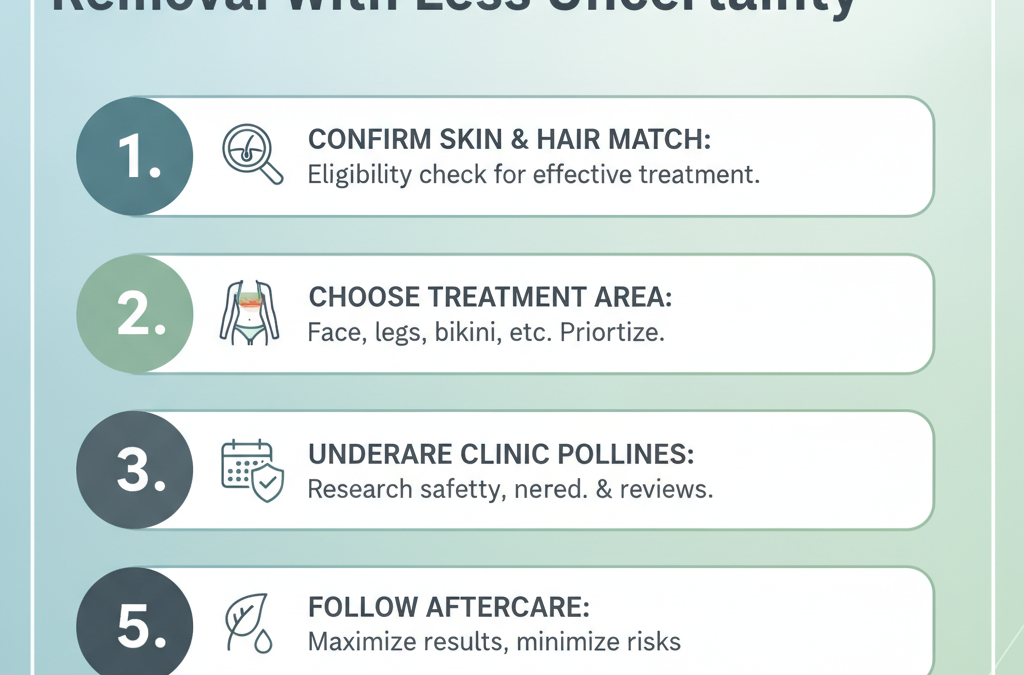
Five Steps to Start With Less Uncertainty
Step 1: Confirm Your Hair and Skin Match
A consultation should identify whether your hair colour, hair thickness, skin tone, and treatment area are likely to respond well. This reduces unrealistic expectations before the first session.
Step 2: Choose the Treatment Area Carefully
Start with the area that causes the most irritation or maintenance stress. Sensitive zones such as the face, bikini area, and underarms often need extra explanation around comfort and aftercare.
Step 3: Understand the Timeline
Hair grows in cycles, so reduction builds gradually. Appointment spacing should match the area being treated and your response over time.
Step 4: Compare Clinic Policies
Ask how the clinic handles touch-ups, areas that need more support, and growth affected by hormones. A clear policy can make the decision easier.
Step 5: Keep Your Home Environment Comfortable
After treatment, follow the clinic’s aftercare instructions and keep your indoor environment comfortable. Avoid excessive heat, manage dry air where possible, and let your provider know if you experience unusual irritation.
FAQs About Laser Hair Removal and Home Comfort
Can indoor temperature affect laser hair removal results?
Indoor temperature does not replace clinical treatment planning, but a comfortable home environment can help you feel better after a session if the skin is temporarily warm or sensitive.
Can I shave between laser appointments?
Yes, shaving is usually allowed because it leaves the hair shaft below the skin. Waxing, threading, and plucking are typically avoided because they remove the target the laser needs.
Does laser treatment hurt more than waxing?
Many clients find laser treatment more comfortable than waxing because hair is not pulled from the root. With Soprano Ice technology, cooling and gradual heating help manage discomfort, though sensitivity varies by area.
Should I avoid heat after treatment?
You should follow the clinic’s aftercare instructions. In general, if skin feels warm or sensitive, a comfortable indoor temperature is preferable to an overheated environment.
Will I need touch-ups after the main plan?
Some clients may need touch-ups because hair growth can be influenced by hormones, age, and dormant follicles. Royal Laser and Skincare Clinic includes lifetime free touch-ups under its clinic policy.
A Clearer Comfort-Based Way to Decide
Whether you are choosing an HVAC system or a laser hair removal clinic, comfort depends on proper assessment, controlled technology, and clear expectations. For laser care, that means reviewing skin tone, hair type, treatment area, sensitivity, and long-term maintenance goals before treatment begins.
If you are comparing clinics, ask direct questions: how many visits may be needed, how settings are selected, how touch-ups work, whether your hair type is responsive, and how your skin will be protected. Clear answers can make the difference between feeling sold to and feeling properly guided.
Ready to ask better questions before your first session?
Speak with Royal Laser and Skincare Clinic about your treatment area, skin tone, hair type, and comfort concerns before deciding how to proceed.
Related Topics
- Laser hair removal treatment planning
- Skin comfort after laser appointments
- Indoor humidity and personal comfort
- Laser hair removal prices
- Full body laser hair removal


