
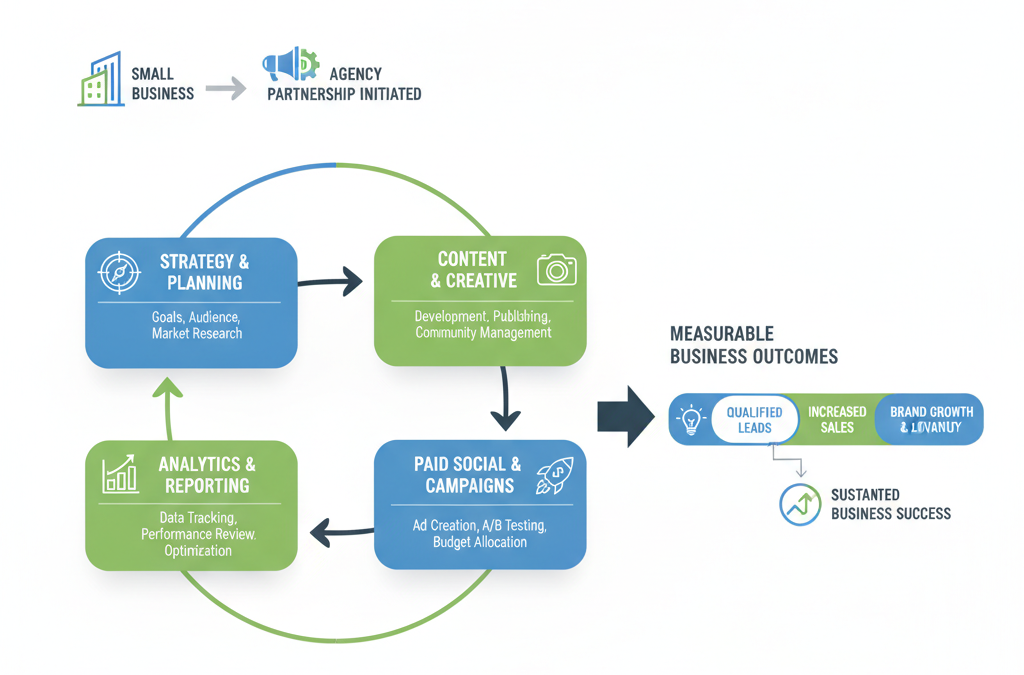
For HVAC contractors, social media is not just a place to post before-and-after photos of equipment installs. A social media marketing agency for small business can help heating and cooling companies plan, create, publish, promote, and measure content that supports real service goals such as booked estimates, emergency repair calls, maintenance plan enquiries, indoor air quality questions, and seasonal replacement leads.
HVAC businesses often operate in competitive local markets where trust, timing, and visibility matter. This rewritten guide adapts the core ideas from the original social media marketing agency for small business guide for contractors, technicians, and home service companies that want social media to support revenue instead of becoming another disconnected marketing task.
Social media works best for HVAC when it connects with a broader marketing system. That system may include Digital Marketing Services, local search visibility, paid ads, website improvements, call tracking, and analytics. Without that connection, an HVAC company may stay busy posting seasonal tips while missing the link between content, calls, quote requests, and closed jobs.
Why HVAC companies need a practical social media strategy
HVAC customers usually contact a contractor because they have a clear need: their furnace is not working, their air conditioner is struggling, they want a new heat pump, or they are comparing maintenance plans. Social media can support those decisions by building familiarity before the urgent moment arrives.
A strong HVAC social media plan does more than fill a calendar. It helps explain services, answer homeowner questions, show professionalism, promote seasonal maintenance, highlight financing or consultation options where applicable, and remind past customers when it may be time to schedule service. The goal is not to be on every platform. The goal is to choose the channels that can influence local homeowners and commercial property decision-makers with the time and budget available.
For example, an HVAC company may use Facebook and Instagram for homeowner education, local brand awareness, technician culture, review-style trust signals, and seasonal reminders. A contractor serving commercial accounts may use LinkedIn to reach property managers, builders, facility managers, or business owners. The right agency should match the platform mix to the HVAC company’s service area, offer, capacity, and sales process.
How a social media marketing agency helps HVAC contractors
A social media agency that understands small business marketing usually supports four connected areas: strategy, content production, community management, and performance measurement. For HVAC, strategy should define the service priorities, seasonal timing, target neighbourhoods, customer concerns, content themes, and campaign goals.
Content production turns those decisions into posts, short videos, captions, service explainers, maintenance reminders, ad creative, and landing-page messaging. For an HVAC company, useful content may cover furnace tune-ups, AC repair warning signs, heat pump questions, filter changes, thermostat issues, maintenance agreements, indoor air quality, and the difference between repair and replacement conversations.
Community management is also important because HVAC enquiries can be time-sensitive. The agency may help with response guidelines for comments, inbox messages, reviews, and common service questions. Performance measurement then connects social activity to useful business signals such as phone calls, form submissions, booked estimates, service-area enquiries, or maintenance plan signups.
What social media support can include for an HVAC business
Social media support for HVAC companies may include organic content, paid social advertising, creative testing, local campaign planning, reporting, and coordination with search or PPC activity. The best plans define what each channel is responsible for. Organic posts may build trust and answer common questions, while paid campaigns may promote seasonal service reminders, replacement consultations, or local awareness.
Many HVAC companies do not need a huge content machine. They need a consistent and realistic plan that can be maintained during busy seasons. A practical monthly plan may include a content calendar, technician photo guidance, short-form video ideas, caption writing, campaign setup, retargeting audiences, conversion tracking, and performance reporting.
- Audience and service-area research: The agency identifies which homeowners, property owners, or commercial decision-makers are most relevant to the HVAC company’s services.
- Seasonal content planning: The agency turns heating, cooling, maintenance, and indoor air quality priorities into a repeatable publishing plan.
- Creative production: The agency prepares visuals, captions, short videos, carousels, ad copy, and campaign variations for testing.
- Paid social management: The agency builds campaigns, tests audiences and creative, manages budgets, and reviews lead quality.
- Analytics and reporting: The agency connects social media activity to measurable actions through GA4, Google Tag Manager, conversion tracking, call tracking where available, and dashboards.
When an HVAC company should consider hiring an agency
An agency may make sense when an HVAC contractor needs consistent execution, better reporting, more structured campaign testing, or help connecting social media to leads and booked jobs. It can also be useful when the owner, office team, or technicians can provide subject knowledge but do not have time to plan, design, publish, advertise, and measure content consistently.
However, an agency may not be the right first step if the company has no clear service offer, no working website, no process for answering calls quickly, or no way to follow up with quote requests. In those cases, the better first move may be fixing the conversion path: service pages, contact forms, phone routing, CRM process, quote follow-up, or landing pages.
A helpful question is simple: if social media generated more HVAC enquiries next month, could the company answer them quickly, qualify the location and service need, schedule the right appointment, and track which enquiries became customers? If the answer is no, the social media plan should include operational fixes before increasing campaign volume.
Agency, freelancer, or in-house: what fits an HVAC contractor?
HVAC companies often compare agency support with hiring a freelancer or assigning social media to an internal employee. Each approach can work, but the right structure depends on the number of platforms, content workload, ad complexity, reporting needs, and how much internal time the business can provide.
Agency support
A) Full-service social media agency: A full-service agency handles planning, creative, ads, tracking, and reporting through a coordinated process.
- How it works: Specialists support strategy, content, paid campaigns, analytics, and conversion recommendations.
- Best fit: This structure fits HVAC companies that need reliable execution and want social media connected to broader marketing activity.
- Example: A contractor running seasonal social ads may also need landing pages, Google Ads Management, and conversion tracking reviewed together.
Freelance support
B) Independent freelancer: A freelancer can be efficient for design, caption writing, scheduling, or short-form video editing.
- How it works: The HVAC company usually provides direction, service details, approvals, photos, and performance expectations.
- Best fit: This structure fits contractors that already have a clear marketing strategy and need help with production tasks.
- Example: An HVAC office manager may collect technician photos and job notes, while a freelancer turns them into posts and reels.
In-house execution
C) Internal employee or owner-led posting: In-house content can feel authentic because the person creating it is close to customers, technicians, equipment, and daily operations.
- How it works: The internal person captures photos, answers questions, publishes updates, and shares real company moments.
- Best fit: This structure fits HVAC businesses with strong internal time, simple campaign needs, and a clear voice.
- Example: An owner may record quick homeowner tips while an agency supports analytics, paid campaigns, and content repurposing.
What a strong HVAC social media plan should answer
A sound social media plan should explain how content supports HVAC business outcomes. If the plan only lists posting frequency, platforms, and generic creative themes, it may be too thin. Posting three times per week is not a strategy by itself; it is a production schedule.
For HVAC, the plan should answer practical questions. Which services need more visibility? Are you trying to increase repair calls, replacement estimates, tune-up bookings, maintenance plan enquiries, or commercial opportunities? Which customer concerns should content address before someone calls?
- Clear goal hierarchy: The plan separates awareness metrics from business metrics such as calls, form submissions, booked estimates, and lead quality.
- Platform logic: The agency explains why each channel is included and what role it plays in the customer journey.
- Service-specific messaging: Furnace repair, AC installation, maintenance, heat pumps, and indoor air quality may each require different messages.
- Creative testing plan: The agency tests different hooks, formats, visuals, offers, and calls to action instead of relying on one creative direction.
- Tracking setup: The agency confirms that GA4, Google Tag Manager, pixels, events, forms, and key conversion actions are configured properly before judging campaign performance.
- Reporting rhythm: The agency reports what changed, why it changed, and what will be adjusted next.
Metrics HVAC companies should track beyond likes and followers
Likes, comments, shares, and follower growth can show whether content is getting attention, but they do not automatically prove business value. A post about an HVAC tip may receive engagement from people who are not ready to book service. A quieter campaign may still produce qualified enquiries if the audience, offer, and landing page are aligned.
HVAC contractors should separate platform metrics from conversion metrics. Platform metrics show how content performs inside the social network. Conversion metrics show what people do after clicking, calling, filling out a form, or requesting an appointment.
- Reach and impressions: These numbers show how often content was displayed and whether local visibility is growing.
- Click-through rate: This metric shows whether the creative and message are strong enough to move people from the platform to the next step.
- Cost per lead: This metric helps compare paid social performance against other channels when lead tracking is accurate.
- Lead quality: This signal shows whether enquiries match the company’s service area, job type, equipment focus, and customer profile.
- Conversion rate: This metric shows how effectively landing pages, forms, phone prompts, or booking flows turn traffic into action.
Reporting should also connect social media with SEO Services when content supports search demand. For example, a homeowner question that performs well on social media may also deserve a service-page section, blog post, or FAQ entry on the HVAC company’s website.
Common social media mistakes HVAC companies make
Many HVAC businesses struggle with social media because the work becomes reactive. Someone posts only when there is time, boosts a post without a campaign structure, or changes direction after a few weak results. The result is inconsistent data, inconsistent messaging, and little clarity about what actually influenced calls or quote requests.
Another common issue is separating social media from the website. A campaign may send visitors to a slow page, unclear service offer, weak contact form, or page that does not explain service areas. In that scenario, the ad creative may be blamed even though the conversion path is the real issue. Social media and Website Design & Development often need to be reviewed together.
- Posting without a next step: Content should guide interested people toward a clear action, such as calling, requesting a quote, booking maintenance, or visiting a relevant service page.
- Using the same message all year: Heating, cooling, tune-up, replacement, and emergency repair campaigns often need different timing and messaging.
- Ignoring service areas: HVAC marketing should make it easy for prospects to understand whether the company serves their location.
- Judging paid campaigns too quickly: Paid social needs enough data to compare audiences, creative, placements, and landing-page behaviour before major decisions are made.
- Tracking only platform leads: Phone calls, website forms, booked estimates, CRM outcomes, and offline sales can change the real performance picture.
What HVAC contractors should prepare before hiring an agency
A social media agency can move faster when an HVAC company has a clear offer, brand assets, service details, customer insights, and basic performance history. The agency does not need perfect materials on day one, but scattered information slows down planning and production.
Even a simple shared folder can help. Useful materials include logos, truck photos, technician photos, equipment images, service descriptions, maintenance plan details, customer questions, reviews, brand guidelines, and examples of past campaigns. It also helps to define what can and cannot be shown in job-site content.
- Business goals: Define whether the priority is repair calls, replacement estimates, maintenance plans, recruitment, commercial work, or customer education.
- Audience details: Share customer types, common objections, service-area priorities, sales cycle details, and questions customers ask before booking.
- Offer clarity: Identify which services, seasonal promotions, maintenance options, or consultations should receive attention first.
- Access and assets: Prepare social account access, ad account access, brand files, photos, videos, website logins, and analytics access.
- Sales feedback: Share which leads became good customers, which leads were poor fits, and which questions appeared during follow-up.
How social media fits into a full HVAC marketing system
Social media should not operate in isolation for an HVAC company. It should support the same business priorities as the website, local SEO, PPC campaigns, email follow-up, review generation, and customer service process. A homeowner who sees a maintenance reminder on Facebook may later search the company name on Google, read reviews, visit the furnace tune-up page, and then call.
That means the marketing system needs consistency. The service pages should match the campaigns. The contact options should be easy to find. Tracking should show where enquiries come from. The office team should know which campaigns are active. When these pieces work together, social media becomes part of a practical customer acquisition and retention system rather than a disconnected content channel.
FAQs About social media marketing for HVAC small businesses
How do I know if my HVAC company is ready for a social media agency?
Your company is likely ready if you have clear services, a working website or booking path, and enough capacity to respond to new enquiries. If tracking, follow-up, or service pages are weak, an agency should address those items before increasing campaign activity.
Should HVAC companies focus on organic social or paid ads first?
Organic social helps build trust, answer homeowner questions, and keep the company visible. Paid ads can reach specific local audiences faster. Many HVAC companies benefit from building organic foundations first, then using paid campaigns when the offer, landing page, and tracking are clearer.
Which social platforms are best for HVAC contractors?
The right platform mix depends on the customer base and content capacity. Facebook and Instagram often fit residential HVAC because they support local visibility and visual content. LinkedIn may be useful for commercial HVAC, builders, property managers, and business decision-makers.
What should an HVAC social media report include?
A useful report should include reach, engagement, clicks, calls or form submissions where tracked, lead quality notes, campaign changes, and next actions. The report should explain what the numbers mean for the business, not just list platform metrics without context.
Can social media help with seasonal HVAC demand?
Yes, social media can support seasonal reminders for heating, cooling, maintenance, and indoor air quality topics. The key is to plan content and campaigns before peak demand instead of waiting until the schedule is already full or the season has already shifted.


